
Woke rating
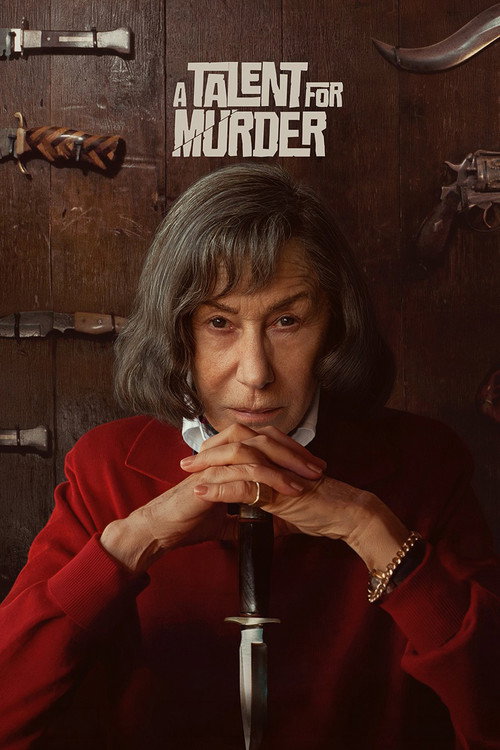
A Talent for Murder
None or negligible
A psychological thriller about Patricia Highsmith and a young editor in which the writer's sexuality and prejudices belong to a harsh, true-to-life portrait; there is no identity or political messaging to score.
Edward Ridgeway, a young editor from a New York publishing house, is sent to Patricia Highsmith's house in the Swiss countryside to get her to sign a contract for one last Ripley novel. She drinks, insults him and tries to throw him out, then gives him one night. The two start plotting the new book together, and the story they invent plays out on screen in Rome and Zurich: a charming young man, played by Edward, sets out to marry Clementine, an heiress Edward met on the train, and to get rid of the relatives who stand between her and the family money.
Highsmith is the only character with an identity angle, and the film does not flatter her. She lists the people she left New York to escape, from Jews and Blacks to Puerto Ricans, Catholics and Koreans (0:12:15), complains that New York thinks women cannot be geniuses (0:15:23), and hints at her own sexuality while taunting Edward with slurs about his (1:10:53). All of it is characterisation of a cruel, lonely real writer, never a message. Class runs through the story as motive: Edward resents colleagues with Yale rowing and trust funds (0:19:22), and a guest at Aunt Peg's party coaches him on passing as old money (1:06:03). It is the engine of a crime story, not a cause.
Nothing scores. The cast is white Americans and Europeans in Switzerland and Italy, the only couple is a white man and woman, and the menace in the film is shared between Highsmith and EdwardEdward, who turns out to have killed his own parents (1:32:35), so no moral side lines up with ethnicity or sex.
Score breakdown
Each category is scored 0 to 3: 0 absent or presence only, 1 brief, 2 recurring or plot-relevant, 3 central or dominant. Timestamps refer to the film's running time.
| Category | Score | What we saw |
|---|---|---|
| Content | ||
| A Ethnicity | 0 | No ethnic theme. Highsmith's contemptuous list of New Yorkers, including Jews, Blacks, Puerto Ricans and Koreans (0:12:15), fits the real writer's known prejudices and is shown as part of her nastiness, not as a message. The characters with a part are all white. |
| B Gender and feminism | 0 | Highsmith complains once that New York's literary men think women cannot be geniuses (0:15:23), but the line serves her vanity, comes moments after she calls half of New York the dregs of humanity, and is never taken up again. Clementine is a rich young woman written first as the mark in the story-within-the-story; no point is made about women. |
| C Sexuality and gender identity | 0 | Highsmith is a lesbian, as the real writer was; the film hints at it once, when she says she knows a homosexual when she sees one, for obvious reasons (1:11:04). She is far from flawless: a heavy drinker and a bully who insults everyone, calls Edward a pansy and worse (1:10:53) and finally tries to shoot him (1:36:24). Her talk of hermaphrodite snails (0:10:19) and Clementine's thesis on Caravaggio and homoeroticism (0:43:41) are character colour. Under the rubric that scores 0. |
| D Power and systems | 0 | No institution is framed as oppressing a group. Highsmith's scorn for her publisher's money-making (0:11:46) is personal, not political. |
| E Cultural and historical revision | 0 | Adapted from Joanna Murray-Smith's stage play Switzerland. Highsmith is shown as the real woman was: a Texas-born American writer living in Ticino, a lesbian with well-known prejudices and a collection of snails and weapons. No one is recast by sex, ethnicity, sexuality or religion. |
| F Religion portrayal | 0 | Islam does not appear. |
| K Diverse cast | 0 | The characters with a part are white Americans and Europeans: Highsmith, Edward, Clementine, her grandfather in Rome, and Aunt Peg and her friends in Switzerland. Highsmith's sexuality is the real woman's. There is no mix to score. |
| Treatment | ||
| G Antagonist coding | 0 | The two dangerous figures are a white woman and a white man, Highsmith and Edward, and no minority or female character stands out on the good side. Aunt Peg and her old-money friends are snobbish, but they are targets in the invented story, not villains coded by ethnicity or sex. |
| H Didacticism | 0 | The long speeches are about writing, murder, money and Ripley. Kathryn Grierson's talk about reinventing oneself (1:06:03 to 1:08:02) is advice to a social climber, not a lecture on a social message. |
| I Message over story | 0 | The story leads throughout; nothing bends toward a message or a cast mix. |
| J Left-leaning politics framed as good | 0 | Class drives the plot: Edward contrasts himself with colleagues who rowed at Yale and had trust funds (0:19:22), and the Ripley figure covets the world money buys (0:38:11). But the envy belongs to a murderer and is never framed as just, and the rich are neither condemned nor admired, so no left-leaning position is presented as good. |
How the number is reached
- Categories A to K add up to 0 of 33, which gives 0.0 (0 ÷ 33 × 10, rounded to the nearest 0.5).
- No counterweight: None needed: nothing scores, so there is no message for the film to complicate.
- Final rating 0.0, none or negligible.
Considered, scored 0
- Highsmith's lesbianism, hinted at once (1:11:04): a real woman shown as she was, and a bully rather than a flawless figure (C).
- Her slurs at Edward and her insistence that he likes men (1:10:53 to 1:11:38), used as a weapon in their power game, not as a point about sexuality (C).
- Her list of the 'dregs of humanity', from Jews and Blacks to Catholics and Koreans (0:12:15), shown as part of her bigotry (A).
- Her complaint that New York thinks women cannot be geniuses (0:15:23), a single line of grievance (B).
- Her fascination with hermaphrodite snails (0:10:19) and Clementine's thesis on Caravaggio and homoeroticism, which she herself says may be a modern reading (0:43:41).
- Kathryn Grierson, a cobbler's daughter who once wanted to be her heiress friend, calling herself an 'ally' of the social climber Edward (1:07:03, 1:07:11): about ambition, not politics (J).
- Edward's resentment of rich colleagues (0:19:22) and the Ripley figure's appetite for the world of the rich (0:38:11), the motive of a murderer (J).
- The only couple, Edward's Ripley figure and Clementine (0:47:03), is a white man and woman; no mixed or same-sex couple is shown.
- The white American and European cast of a story set in Switzerland and Italy (K).
Evidence and confidence
Confidence: Medium. Full English subtitles (embedded track), plus the forced track for a short German phone call (1:25:34). No gaps in the dialogue were found.
Category F definition: As in the rubric: Islam shown as a peaceful and tolerant religion, aligned with human rights, in a way that works as a corrective message.
Rubric version 3. Reviewed 20 November 2026.