Woke rating
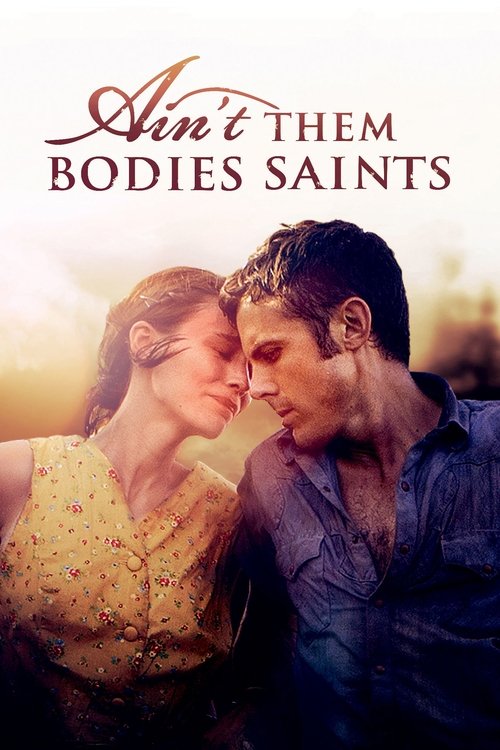
Ain't Them Bodies Saints
None or negligible
A hushed Texas outlaw romance about a man who breaks out of prison to get back to his wife and the daughter he has never met, with no progressive messaging: its subjects are love, waiting and the cost of crime.
David Lowery's film opens on young outlaws Bob Muldoon (Casey Affleck) and Ruth Guthrie (Rooney Mara) cornered after a shootout in the Texas hills. Ruth wounds a deputy, Patrick Wheeler (Ben Foster), but Bob takes the blame and goes to prison. Four years later he escapes and heads home, while Ruth raises their daughter Sylvie under the eye of Skerritt (Keith Carradine), the old man who raised them both, and of Patrick, who has come to care for her.
The story is told mostly through letters, glances and long silences. The few things the rubric looks for appear only in passing: Ruth admits she was never the frightened girl her statement made her out to be, a Black friend from Bob's past runs the bar where the lawmen come asking questions, and the lawman she shot holds no grudge. None of it is framed as commentary.
The story is told mostly through letters, glances and long silences. The few things the rubric looks for appear only in passing: Ruth admits she was never the frightened girl her statement made her out to be, a Black friend from Bob's past runs the bar where the lawmen come asking questions, and the lawman she shot holds no grudge. None of it is framed as commentary. Hired gunmen come after Bob, Skerritt is drawn into the violence, and Bob reaches Ruth's house badly wounded at the end.
The score stays at zero because nothing is argued. The law is represented by a decent deputy rather than an oppressive system, the villains are criminals with their own reasonsgunmen sent to settle old scores, and the film's sympathy for Bob and Ruth is about love and loyalty, not about any social or political position.
Score breakdown
Each category is scored 0 to 3: 0 absent or presence only, 1 brief, 2 recurring or plot-relevant, 3 central or dominant. Timestamps refer to the film's running time.
| Category | Score | What we saw |
|---|---|---|
| Content | ||
| A Ethnicity | 0 | Ethnicity never comes up. Bob's friend Sweetie, a Black bar owner, appears in a few scenes without comment (0:48:30, 0:59:30); he is an old associate from Bob's outlaw days who says he got out of that racket (0:47:41) and later has false names made up for Bob's family (0:59:21), so he is not portrayed as flawless. No mixed couple appears; the central couple, Bob and Ruth, are both white. |
| B Gender and feminism | 0 | Ruth tells Patrick she was not a girl dragged in over her head but knew what she was doing (1:12:33). It is a confession about her guilt, not a point about women, and gender is never a theme. |
| C Sexuality and gender identity | 0 | No LGBTQ characters or themes. |
| D Power and systems | 0 | Prison and the police are the obstacles any outlaw story needs, not institutions shown oppressing a group. The deputy Ruth shot says getting shot was part of his job and he holds nothing against Bob (1:11:33). |
| E Cultural and historical revision | 0 | An original story; no established characters or history are recast. |
| F Religion portrayal | 0 | Religion appears only in Bob's story of telling a guard he used to be the devil and is now just a man (0:25:20). Islam is not mentioned. |
| K Diverse cast | 0 | The cast is essentially white small-town Texans of the 1970s, with Sweetie as the single minority character in a supporting part. No sexuality or religion is part of the mix. |
| Treatment | ||
| G Antagonist coding | 0 | The antagonists are lawmen doing their job, Skerritt warning Bob away from Ruth and Sylvie (0:40:37), and armed men with criminal motiveshired gunmen sent after Bob (1:22:00). Heroes and villains alike are white men, and the moral sides do not divide along ethnicity or sex. |
| H Didacticism | 0 | The long speeches are love letters and stories (0:08:20, 0:34:46, 0:53:03, 1:28:43); none carries a social or political message. |
| I Message over story | 0 | The story follows Bob's journey home and Ruth's choice between waiting and moving on; nothing bends toward a message. |
| J Left-leaning politics framed as good | 0 | No political positions are argued. Family, fatherhood and keeping a promise drive the story (0:25:03), and the law is personified by a decent man. |
How the number is reached
- Categories A to K add up to 0 of 33, which gives 0.0 (0 ÷ 33 × 10, rounded to the nearest 0.5).
- No counterweight: There is no progressive messaging to mock or complicate.
- Final rating 0.0, none or negligible.
Considered, scored 0
- Sweetie, a Black bar owner and old associate of Bob's who helps him with false names, shown without comment (0:47:41, 0:48:30, 0:59:21): a single minority character, not flawless (A, K).
- Ruth's admission that she knew what she was doing and was not dragged in over her head (1:12:33), a confession about guilt rather than a point about gender.
- Bob's memory of playing with Freddie's toys and 'all those little Indians' as a boy (0:38:01), a passing childhood detail.
- The deputy saying he holds no grudge against Bob and that getting shot was part of his job (1:11:33), which, if anything, shows the law sympathetically.
Evidence and confidence
Confidence: Medium. A transcript of the audio (the file has no English text subtitles). The film is quiet and much of it is music or silence; the transcript garbles a few murmured lines (around 0:02:19 and 0:42:44), but every scene's sense is clear from the dialogue around it and the picture.
Category F definition: As in the rubric: Islam shown as a peaceful and tolerant religion, aligned with human rights, in a way that works as a corrective message.
Rubric version 3. Reviewed 18 November 2026.