Woke rating
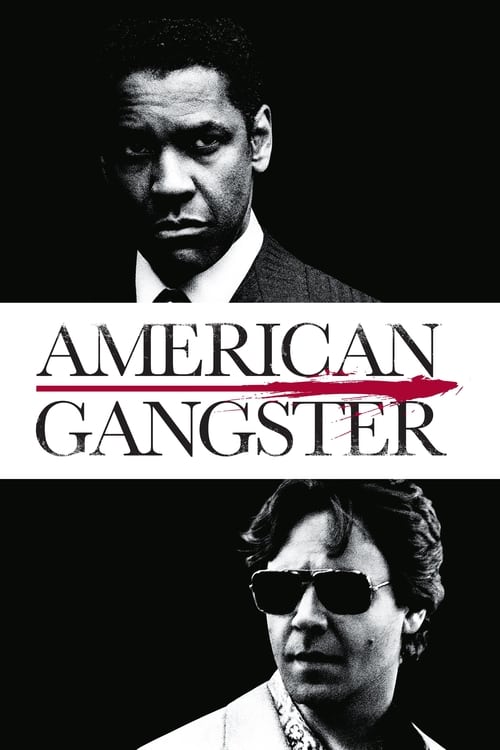
American Gangster
None or negligible
Ridley Scott's Harlem heroin saga touches on ethnicity and police corruption, but it keeps both inside a crime story whose drug-lord hero is nobody's victim.
Ridley Scott's crime epic, reviewed here in its Unrated Extended Cut, follows Frank Lucas (Denzel Washington), for fifteen years the driver and enforcer of Harlem boss Bumpy Johnson. After Bumpy dies, Frank builds a heroin empire by going straight to the source in the jungles of Southeast Asia and flying the drug home on US military planes during the Vietnam War. Alongside him runs the story of Richie Roberts (Russell Crowe), a Newark detective studying law at night, shunned by other officers for turning in nearly a million dollars of found cash, who is put in charge of a narcotics squad and slowly works out who is behind the cheap, potent 'Blue Magic' on every corner.
Ethnicity and police corruption are the two threads that carry anything like a message. Frank tells his brothers that Bumpy was rich but never 'white man rich', because white men owned what he ran; a Mafia boss boasts that he is more enlightened about civil rights than his associates; and when Richie tells a senior official that his target is Black, not Italian, the man laughs it off with slurs. Late on, Richie tells Frank the Mafia hates what he represents, a Black businessman and progress, and Frank answers with a childhood memory of police killing his young cousin. On the corruption side, cops resell seized heroin, ostracise the one honest detective and shake Frank down, and Richie concludes that too many people make a living from drugs for anyone to want the trade stopped.
Ethnicity and police corruption are the two threads that carry anything like a message. Frank tells his brothers that Bumpy was rich but never 'white man rich', because white men owned what he ran; a Mafia boss boasts that he is more enlightened about civil rights than his associates; and after Richie's search of a military plane comes up empty, a senior official laughs off the idea that the target is Black, not Italian, with slurs. In the interrogation after Frank's arrest, Richie tells him the Mafia hates what he represents, a Black businessman and progress; Frank answers with a childhood memory of police killing his young cousin, and agrees to give up the corrupt officers who robbed him. On the corruption side, cops resell seized heroin, ostracise the one honest detective and shake Frank down, Richie concludes that too many people make a living from drugs for anyone to want the trade stopped, and the film closes on news reports of mass indictments of New York narcotics detectives.
What keeps the score this low is that none of it is preached. The ethnicity lines are spoken in character by gangsters and officials, and the corruption thread is about greed, not about a group held down. Frank is no victim hero: he shoots a rival on a crowded street, his heroin is shown killing addicts, and his own talk is full of ethnic slurs. The crooked cops want money, the Italians want their market, and the film's moral centre is a cop who will not take a bribe.
Score breakdown
Each category is scored 0 to 3: 0 absent or presence only, 1 brief, 2 recurring or plot-relevant, 3 central or dominant. Timestamps refer to the film's running time.
| Category | Score | What we saw |
|---|---|---|
| Content | ||
| A Ethnicity | 1 | Ethnicity recurs as plot texture: white ownership of Black business, the Mafia's attitudes and the authorities' disbelief that a Black man could outdo the Mafia. Scored 1: it comes in a few in-character exchanges and is never the film's main point. No Black character is drawn as flawless: Frank is a killer and a heroin dealer. His marriage to Eva, a Puerto Rican beauty queen, is not counted: a Latino partner does not make a couple mixed, and they are the real couple besides.
|
| B Gender and feminism | 0 | No gender point. The women are mostly wives, mothers and the cutters who work near-naked in Frank's heroin lab (2:25:30), and Richie's ex-wife's courtroom rebuke over his cheating (1:55:59) is about their marriage, not about women. |
| C Sexuality and gender identity | 0 | No LGBTQ+ content. |
| D Power and systems | 0 | Police corruption is the film's second strand: cops resell seized heroin (0:15:19), shun the honest detective, extort Frank (1:35:19), and Richie says the whole system lives off the drug trade (1:49:50). The target is greed and graft, not the oppression of a group, and honest officers win in the end. Frank's memory of police killing his young cousin is counted under A. |
| E Cultural and historical revision | 0 | A dramatisation of the real careers of Frank Lucas and Richie Roberts. It is loosely based on events, but no established character is recast and nothing is revised to carry a message. |
| F Religion portrayal | 0 | Islam is not portrayed. Muhammad Ali appears only as a fighter announced at the Garden (1:32:18). |
| K Diverse cast | 0 | The mix is the true story and its setting: Frank's Black family and crew in Harlem (0:48:30), the Italian Mafia, Richie, who is Jewish, and a New Jersey narcotics squad with a Black and a Puerto Rican detective among its white members (2:12:30), all of which the time and place account for. No character's sexuality is at issue, so nothing remains to count. |
| Treatment | ||
| G Antagonist coding | 0 | The sides do not divide along ethnicity or sex. The crooked cops and the bigoted official are white men, but the film's hero and moral centre, Richie, is a white man too, and the Black lead, Frank, is a drug lord, not a good side for them to be set against. The antagonists have individual motives: Trupo's greed, Cattano's business interests, Frank's rivals and Frank himself. |
| H Didacticism | 1 | There are no speeches to the audience. Two short exchanges state a point about ethnicity directly, each in character.
|
| I Message over story | 0 | The story leads. The authorities' disbelief helps keep Frank out of sight, and the corrupt cops are obstacles in a crime plot, but nothing bends to make a point. |
| J Left-leaning politics framed as good | 0 | The Vietnam War is backdrop through period TV news, including an anti-war remark (0:38:46) and the fall of Saigon (2:07:48); the film takes no side. Military complicity and police corruption belong to the crime plot and are not framed in left or right terms. Family, church and the honest cop are treated with respect. |
How the number is reached
- Categories A to K add up to 2 of 33, which gives 0.5 (2 ÷ 33 × 10, rounded to the nearest 0.5).
- Counterweight −0.5: the film complicates its own threads: Frank, the businessman cast as 'progress', answers a rival's dare by shooting him on a crowded street (0:53:52), his heroin is shown killing addicts (0:40:30, 1:42:30), Richie lists the parents of dead kids against him (2:37:10) and Frank offers up Jewish, Irish and Italian gangsters in slurs of his own (2:39:28); and the antagonists have plain individual motives, from Trupo's greed (1:36:08) to Cattano's interest in Frank's supply (1:26:12).
- Final rating 0.0, none or negligible.
Considered, scored 0
- Frank and Eva, a Black man and a Puerto Rican woman, as a recurring married couple (0:58:26, 1:34:25): a Latino partner does not make a couple mixed, and they are the real couple (A).
- Bumpy Johnson's opening lament about chain stores and Asian imports putting Americans out of work, with a slur (0:02:30), a gangster's nostalgia the film turns on its head when Frank cuts out the middlemen himself.
- A largely Black cast in Frank's Harlem and North Carolina family scenes, and a mixed narcotics squad, shown without comment: the people the true story and its setting had (K).
- Nicky Barnes's offer to tell Frank about his 'black coalition' (1:45:38), which Frank waves away.
- The naked women cutting heroin in Frank's lab (2:25:30), shown as part of the operation, not as a statement.
Evidence and confidence
Confidence: Medium. The file is the Unrated Extended Cut (about 2 h 56 min with credits), so timestamps run later than in the 157-minute theatrical version. It has no English text subtitles, so the dialogue comes from a transcript of the English audio. It covers the whole film but garbles some names (Eva comes out as 'Eva Hendoff', Richie as 'Robinson' or 'Robbins', Lucas once as 'Lewis'), labels the wordless opening as Spanish, repeats one line many times (2:40:44 to 2:40:58), and leaves short exchanges in Southeast Asia untranslated (0:27:07, 0:30:22). The bar scene where Lou points out two detectives and their dates (0:50:39) is known from the dialogue only.
Category F definition: As in the rubric: Islam shown as a peaceful and tolerant religion, aligned with human rights, in a way that works as a corrective message.
Noted, not scored: Some points cut the other way: the honest cop who turns in a million dollars is the film's moral centre and tells Frank it was simply the right thing to do (2:35:38), and Frank's mother rebukes him in the name of family (2:20:53).
Rubric version 3. Reviewed 18 November 2026.