Woke rating
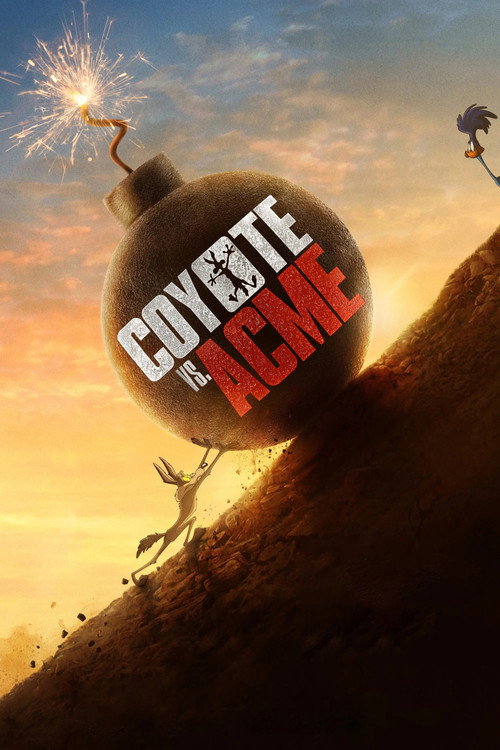
Coyote vs. Acme
None or negligible
A live-action Looney Tunes courtroom comedy built on a David-and-Goliath lawsuit against a crooked corporation; the anti-corporate theme drives the plot, but there is almost no identity messaging and its lawyer hero and coyote client are far from saints.
Dave Green's hybrid comedy puts Wile E. Coyote in the office of Kevin Avery (Will Forte), a billboard injury lawyer who settles everything for a few hundred dollars. His idealistic intern Paige turns a $300 rocket-skate claim into a suit over every Acme cartoon product, and the tiny firm finds itself up against Acme's star lawyer Buddy Crane (John Cena) and its CEO, Foghorn Leghorn. Most of the film is slapstick, courtroom farce and a mystery about a missing Acme inventor.
The messaging is the plot itself. Acme is a monopoly whose lawyer boasts that it wrote the law, the local news repeats its line, and the investigation uncovers a buried Acme project in which cartoons pay for the company's profits with their pain. Kevin delivers one statement on the courthouse steps about companies that think they can do whatever they want, Paige says she came to a small firm rather than help rich men get richer, and at a congressional hearing Foghorn argues that a little cartoon pain is the price of progress. Acme's lawyer wraps his case in freedom, personal responsibility and 'God bless the troops', and later claims the silent majority.
The messaging is the plot itself. Acme is a monopoly whose lawyer boasts that it wrote the law, the local news repeats its line, and the investigation uncovers Project Sisyphus: Acme deliberately sold cartoons faulty products to gather data for its human product lines, and made the inventor who objected disappear. Kevin delivers one statement on the courthouse steps about companies that think they can do whatever they want, Paige says she came to a small firm rather than help rich men get richer, and at a congressional hearing Foghorn argues that a little cartoon pain is the price of progress. Acme's lawyer wraps his case in freedom, personal responsibility and 'God bless the troops', and later claims the silent majority. Leaked footage brings a raid, Crane and Foghorn are arrested, and an end card says the firm went on to take on many more corporate Goliaths.
What keeps the score low is that the target is one crooked company's fraud and cover-up, not capitalism or a group's oppression, and the remedy comes through the courts and Congressleaked evidence and a police raid, not a movement. The heroes are flawed: Kevin is lazy and lies to his client, and Wile has his own reasons for wanting the Road Runner in court. Paige, Kevin's Asian-American niece and intern, is the one character who is right from start to finish, but her ethnicity is never mentioned and her eagerness is played for gentle comedy. Sex and sexuality carry no message, and Kevin's big speech to Congress is about perseverance, not politics.
Score breakdown
Each category is scored 0 to 3: 0 absent or presence only, 1 brief, 2 recurring or plot-relevant, 3 central or dominant. Timestamps refer to the film's running time.
| Category | Score | What we saw |
|---|---|---|
| Content | ||
| A Ethnicity | 1 | No ethnic theme, and no mixed couple appears. Paige, Kevin's Asian-American niece and intern and the second lead, is the film's conscience: she sees the case for what it is from the start, pushes her lazy uncle into it and is proved right, with no real fault beyond comic eagerness. Scored 1, not 2: her ethnicity is never mentioned or made a point of, she is the stock earnest intern rather than a model of anything, and the film teases her idealism.
|
| B Gender and feminism | 0 | Paige is the driven intern who pushes her reluctant boss, but nothing is said about her sex, and the case is won by both of themby Kevin's speech and a leak. |
| C Sexuality and gender identity | 0 | No LGBTQ content. Daffy Duck's demand that Kevin pose nude for a painting is a sight gag. |
| D Power and systems | 0 | No institution is framed as oppressing a group. Corporate wrongdoing drives the plot from start to finish, from a monopoly that writes its own laws to a secret project in which cartoons are treated as expendable test subjects, but that is anti-corporate politics, scored under J. |
| E Cultural and historical revision | 0 | An original story using the Looney Tunes characters as they have always been. No established character is recast. |
| F Religion portrayal | 0 | Religion does not come up. |
| K Diverse cast | 0 | Kevin's four-person firm is mixed by ethnicity: Paige is Asian-American and Sal is Black, alongside Kevin and Dottie, who are white, and the judge is Latino. That much mix is what a contemporary American city would have, and it does not extend to sexuality or religion, neither of which comes up. Paige being the white lawyer's niece is not explained, but nothing is made of it. |
| Treatment | ||
| G Antagonist coding | 0 | The villains are Acme's bosses, defined by corporate greed and wealth, with mocked patriotic flourishes: coding by class and ideology, scored under J. Crane is a white man and Paige stands out on the good side, but the hero is a white man too, and Acme's chief is a cartoon rooster; the sides divide between honest and crooked, not along ethnicity or sex. The villains also have motives of their own: Crane's old rivalry with Kevin and Foghorn's case that the testing produced useful things. |
| H Didacticism | 0 | No speech states an identity message. The one speech with a message, Kevin's on the courthouse steps about companies that think they can do whatever they want, is anti-corporate and scored under J; his longer address to Congress is about Wile's persistence, not politics. |
| I Message over story | 0 | The story leads. The corporate villainy is the premise of a mystery-comedy, and the plot turns on character beats (Kevin's lie, Wile's absenceKevin's lie to Wile, Wile walking out before the hearing) rather than on making a point. |
| J Left-leaning politics framed as good | 2 | Corporate wrongdoing is the plot: a monopoly that boasts it wrote the law, an intern who would rather not help rich men get richer, a secret project that treats cartoons as expendable, and a courthouse-steps speech against companies that think they can do whatever they want. Conservative-sounding rhetoric is put in the corporate villains' mouths as cover for fraud. Scored 2, not 3: the target is one fictional company's fraud and cover-up, not capitalism as a system, and the film's moral axis is honesty against fraud rather than left against right.
|
How the number is reached
- Categories A to K add up to 3 of 33, which gives 1.0 (3 ÷ 33 × 10, rounded to the nearest 0.5).
- Counterweight −0.5: the heroes are flawed and the villains get an argument: Kevin is a lazy lawyer who settles everything and lies to his client, Wile has his own agenda, and Foghorn makes a real case that the testing produced useful products (1:24:05).Kevin is a lazy lawyer who settles everything (0:21:57) and lies to Wile about the Road Runner (1:10:50), Wile took the case only to catch the bird (0:49:09), Foghorn makes a real case that cartoon testing gave the world better shoe soles and a trip to the moon (1:24:05), and the committee drops the inquiry for lack of proof, not out of malice (1:28:03).
- Final rating 0.5, none or negligible.
Considered, scored 0
- The firm's mixed staff and Paige as Kevin's niece (0:10:09), shown without comment: a mix of ethnicity only, as a contemporary American city would have (K).
- Kevin's argument at the motel that Wile is a client, not a pet, and might sue for discrimination (0:25:06), a legal gag.
- Kevin swaps 'garbage men' for 'garbage people' when the real objection is to sneering at the job (0:49:32), a one-line joke.
- Daffy Duck's nude-model painting gag (0:37:20).
Evidence and confidence
Confidence: Medium. No English text subtitles; the dialogue comes from a transcript of the English audio. The transcript garbles some names (Acme as 'Acne') and fills two stretches with repeated filler (0:06:15 to 0:09:13, 0:15:48 to 0:16:06); the first is the wordless cartoon opening. Wile never speaks, so his signs are known only from the screen.
Category F definition: As in the rubric: Islam shown as a peaceful and tolerant religion, aligned with human rights, in a way that works as a corrective message.
Noted, not scored: The film's emotional thesis is a work ethic: Kevin tells Congress that Wile's refusal to quit cured his own laziness (1:19:45), and in the end the police and the courts, not a movement, bring Acme down (1:31:50).
Rubric version 3. Reviewed 17 November 2026.