Woke rating
Fancy Dance
Mild
A quiet road drama about a Native woman searching for her missing sister, whose criticism of how police and child welfare treat reservation families drives the plot but is shown far more than argued.
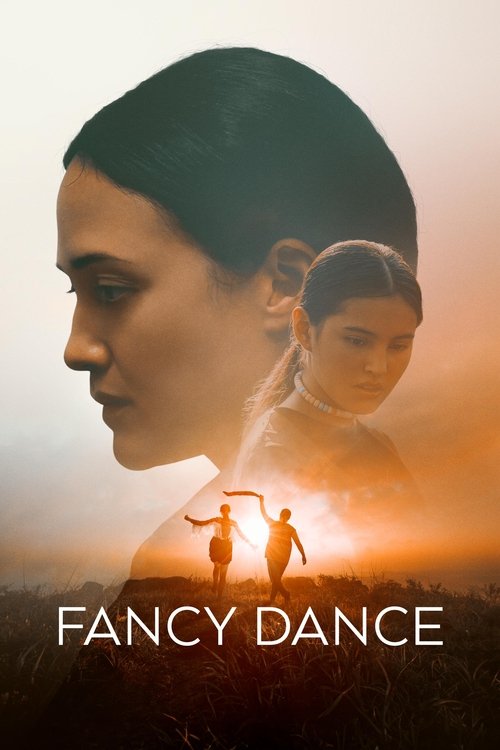
Erica Tremblay's first feature follows Jax (Lily Gladstone), a Cayuga woman on the Seneca-Cayuga reservation in northeastern Oklahoma whose sister Tawi has been missing for two weeks. When child welfare places Tawi's 13-year-old daughter Roki with her white grandfather Frank (Shea Whigham) and his wife Nancy, Jax takes Roki on the road toward the big powwow in Oklahoma City, where mother and daughter dance every year, and looks for Tawi along the way. Some of the dialogue is in Cayuga.
The messaging lives in the plot. The tribal police say the case is federal, the FBI does not call back and no task force is assigned. Jax asks her father to call because his call carries more weight, and he answers that she means because he is white. Once he reports Roki taken, state, local and federal police turn out in force, and an agent tells the tribal officer not to get distracted by Tawi's case. Child welfare hands Roki to a grandfather she barely knows, whose well-meaning wife offers ballet in place of the powwow, and a Homeland Security officer questions the pair about their immigration status after hearing them speak Cayuga. The search leads to the oil workers' camps outside town, and the film ends at the powwow.
The messaging lives in the plot. The tribal police say the case is federal, the FBI does not call back and no task force is assigned. Jax asks her father to call because his call carries more weight, and he answers that she means because he is white. Once he reports Roki taken, state, local and federal police turn out in force, and an agent tells the tribal officer not to get distracted by Tawi's case. Child welfare hands Roki to a grandfather she barely knows, whose well-meaning wife offers ballet in place of the powwow, and a Homeland Security officer questions the pair about their immigration status after hearing them speak Cayuga. Tawi turns out to have been killed by a man who worked on the oil rigs; FBI divers find her in the lake after the tribal officer traces his truck. The film ends at the powwow with the annual memorial dance for missing and murdered relatives, which the announcer says is danced for justice.
What keeps the score in the mild band is that nobody lectures. The officials are courteous rather than villainous, and the removal rests on facts the film itself shows: Jax's record, drugs in the house, and her return to dealing to pay for the search. Frank and Nancy are given reasons of their own, Jax lies to Roki to keep her on the road, and one of the oil workers liked Tawi and helps. The institutional neglect is the backdrop to a family story about an aunt and a niece, not a speech.
Score breakdown
Each category is scored 0 to 3: 0 absent or presence only, 1 brief, 2 recurring or plot-relevant, 3 central or dominant. Timestamps refer to the film's running time.
| Category | Score | What we saw |
|---|---|---|
| Content | ||
| A Ethnicity | 2 | Ethnicity runs through the plot as a matter of whose case counts: the white grandfather's call brings a manhunt that the missing Native mother never got, and Native identity is set against well-meaning white guardians. The Native characters themselves are not drawn as flawless: Jax deals drugs and lies to Roki, and her sister's life was not blameless either, and Tawi was dealing too. Scored 2, not 3: the message is mostly shown through events, and the one open exchange about ethnicity is a family quarrel in which both sides get a say.
|
| B Gender and feminism | 1 | Violence against Native women is the subject, and the danger comes from the men of the oil camps, one of whom killed Tawi, but the film never frames it as a point about men or patriarchy. The closing powwow salutes mothers and daughters as the community's backbone.
|
| C Sexuality and gender identity | 0 | No LGBTQ+ message. Jax's relationship with Sheila, a dancer at the club, is shown without comment, and Jax is a flawed lead rather than a flawless one, so it is listed under 'zeroed'. |
| D Power and systems | 2 | Institutional neglect drives the plot: tribal police without jurisdiction, an FBI that does not respond, and a state that removes Roki and then hunts for her far harder than anyone hunted for her mother. Scored 2, not 3: the officials are polite and the removal rests on real evidence, and in the end federal divers do find Tawi.
|
| E Cultural and historical revision | 0 | An original story. No established characters or history are recast. |
| F Religion portrayal | 0 | Islam does not feature. |
| K Diverse cast | 0 | The cast is Native and white because the story is about a reservation family and the white grandfather who takes the girl in; that mix is what the plot and setting need. Jax's relationship with Sheila, a small part, adds one gay lead and no further mix, and no religious difference is drawn. |
| Treatment | ||
| G Antagonist coding | 2 | The forces against Jax are, again and again, white outsiders: the step-grandmother who wants Roki away from the reservation's 'crazy', the federal agent who puts the manhunt before Tawi, the Homeland Security officer who questions the pair's status, and the oil workers at the camps, one of whom killed Tawi and is never seen, while the Native women at the centre are the side the film is on. A recurring pattern, so 2. Not 3: Frank, a white man, is given sympathy and motives, one camp worker helps, the Native dealers are as dangerous as anyone, and Jax herself is deeply flawed.
|
| H Didacticism | 1 | There are no lectures. Jax's complaints about the police are in character, and the one direct statement is the powwow announcer's dedication at the endof the memorial dance for missing and murdered relatives.
|
| I Message over story | 0 | The story leads. The Homeland Security stop (1:01:39) makes a pointed observation but plays as suspense, since Jax is wanted and hands over her sister's tribal card, and it changes nothing in the plot. The cast is what the setting needs, so nothing bends towards a mix. |
| J Left-leaning politics framed as good | 0 | No party politics or causes are argued, and no conservative values are put down. The cause the film raises, justice for missing and murdered Native women, is presented as a community's grief rather than a partisan position, and is scored under D and H. |
How the number is reached
- Categories A to K add up to 8 of 33, which gives 2.5 (8 ÷ 33 × 10, rounded to the nearest 0.5).
- Counterweight −0.5: the film complicates its own sympathies. Jax goes back to dealing drugs to fund the search (0:32:03) and the removal rests on what was found in her home (0:25:55); Tawi herself was mixed up in dealingTawi was dealing for the same supplier (0:35:20); Jax lies to Roki that her mother will be at the powwow and Roki calls her a liar (1:15:04). Frank tried to reach Jax for two hours before the report and told the agency she is family (0:46:06), Nancy is given a reason for her longing (0:22:16, 0:30:36), one camp worker says he liked Tawi and helps (0:35:10), and the Homeland Security officer lets the pair go (1:03:58).
- Final rating 2.0, mild.
Considered, scored 0
- Jax's relationship with Sheila, a dancer at the strip club (0:09:53, 0:10:30), shown without comment; Jax is a flawed lead, not a flawless one (C, K).
- Sheila, who on screen is not visibly of a different background from Jax (0:10:30), so the two are not counted as a mixed couple (A).
- The Cayuga language, the powwow, regalia-making and dances (0:05:38, 0:16:26, 1:23:03), shown as the family's culture rather than argued.
- Roki's first period and her celebration at the diner (0:57:57, 1:00:33), a coming-of-age moment with no message.
- No mixed couple is shown: Frank's marriage to Jax's late mother is only mentioned (0:20:03, 0:22:38).
- A Native and white cast (0:08:30, 0:18:30), the mix a reservation story with a white grandfather needs (K).
Evidence and confidence
Confidence: Medium. Full English subtitles, with the Cayuga dialogue translated by the forced track. No gaps found; the dialogue ends at 1:26:10 and the rest is credits.
Category F definition: As in the rubric: Islam shown as a peaceful and tolerant religion, aligned with human rights, in a way that works as a corrective message.
Rubric version 3. Reviewed 18 November 2026.