Woke rating
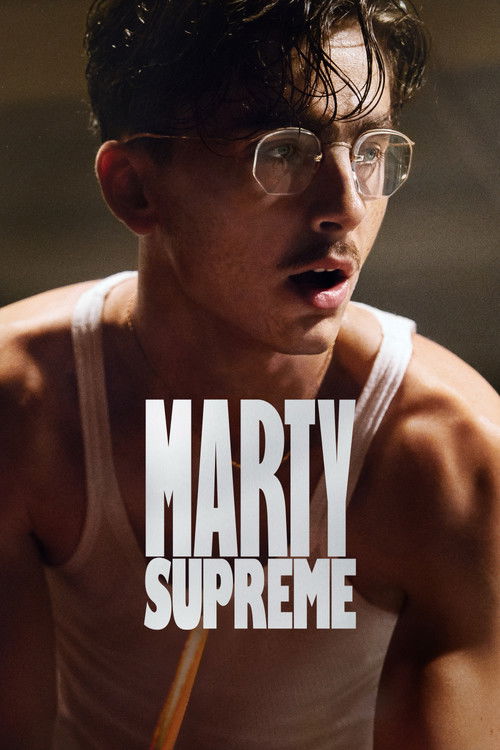
Marty Supreme
None or negligible
A frantic post-war hustler comedy about a table-tennis prodigy, thick with period ethnic jokes and slurs but carrying no progressive message; even its cynical tycoon who treats sport as marketing is a character, not a cause.
Josh Safdie's film follows Marty Mauser (Timothée Chalamet), a 23-year-old New York shoe salesman and table-tennis prodigy who is sure he will be the sport's first American star. After losing in London to an unknown Japanese player, Koto Endo, he spends the film scrambling for the money to reach the world championship in Tokyo: hustling, stealing, romancing a former movie star (Gwyneth Paltrow) and pleading with her husband, the pen tycoon Milton Rockwell (Kevin O'Leary), while his married childhood friend Rachel (Odessa A'zion) turns up pregnant.
The rubric finds very little. The film is crowded with period ethnic talk: Marty jokes about Auschwitz and calls himself Hitler's worst nightmare, he jeers at the Japanese, sore losers throw an ethnic slur at his Black friend Wally, and a gun-toting stranger hurls an antisemitic one at Marty. None of it is commented on; it is simply the world Marty moves through. The nearest thing to a theme is money and power: Rockwell treats the sport as theatre to sell pens in Japan and makes Marty pay dearly for a second chance.
The rubric finds very little. The film is crowded with period ethnic talk: Marty jokes about Auschwitz and calls himself Hitler's worst nightmare, he jeers at the Japanese, sore losers throw an ethnic slur at his Black friend Wally, and a gun-toting stranger hurls an antisemitic one at Marty. None of it is commented on; it is simply the world Marty moves through. The nearest thing to a theme is money and power: Rockwell treats the sport as theatre to sell pens in Japan and makes Marty bend over for a paddling before he will fly him to Tokyo.
What keeps the score at the bottom is that the film takes no side. Marty is a selfish, lying hustler who is just as keen to turn himself into a brand, so his later protest about commerceprotest that Rockwell is using Endo as a mascot reads as self-interest, not critique. The women in his life are stuck in bad marriages, but they scheme as hard as he does, and the story is a character study of ambition.
Score breakdown
Each category is scored 0 to 3: 0 absent or presence only, 1 brief, 2 recurring or plot-relevant, 3 central or dominant. Timestamps refer to the film's running time.
| Category | Score | What we saw |
|---|---|---|
| Content | ||
| A Ethnicity | 0 | Ethnic talk is everywhere as period colour, Marty's jokes about being Jewish and about Japan and slurs from minor villains, but none of it is argued. No non-white character is held up as flawless: Wally is Marty's partner in hustles, and Endo, the Japanese champion, is a dignified but thinly drawn rival. No mixed couple was seen: the film never gives Kay a background or faith that would set her apart from Marty, and Rachel and her husband are Jewish like him. |
| B Gender and feminism | 0 | No gender message. Rachel's violent husband and Kay's loveless marriage to Rockwell are their circumstances, not a point about men, and both women look out for themselves as much as Marty does. |
| C Sexuality and gender identity | 0 | No LGBTQ themes. The sex in the film is Marty's affairs, and the paddling scene is a humiliation, not a sexual theme. |
| D Power and systems | 0 | A cynical tycoon treats sport as marketing (0:40:26) and uses his money to humble Marty, and two cops take a bribe (1:48:57). It is told as individual cynicism, not as a system oppressing a group or as a political point, and Marty is as eager to sell himself. |
| E Cultural and historical revision | 0 | A fictional story in a post-war setting. No established characters are recast, and period attitudes, slurs and wartime grudges against Japan, are left in rather than cleaned up. |
| F Religion portrayal | 0 | Islam does not appear. Religion figures only as Marty's Jewish background, which he jokes about. |
| K Diverse cast | 0 | The main cast is the Jewish world of the Lower East Side the film is set in, with the movie star Kay and the tycoon Rockwell. Wally is the one Black character with a real part, and Endo, the Japanese champion, is there because the plot turns on him. There are no gay characters, so nothing adds to a mixed cast. |
| Treatment | ||
| G Antagonist coding | 0 | The obstacles are individuals with their own motives: Rockwell's grief for his son (0:28:08) and Marty's insult about it (0:41:29), a jealous husband, sore losers and two hard men fighting over a dog. Rockwell is rich, but he is not defined by it. The bigots who slur Wally and Marty are minor, and the men they abuse are hustlers themselves, so no minority or female character stands on a clean good side against them. |
| H Didacticism | 0 | No speeches with a message. The long talks are Marty's self-mythology (0:18:01, 1:35:56) and Rockwell's threats. |
| I Message over story | 0 | The story leads: a breathless character study of one man's ambition. |
| J Left-leaning politics framed as good | 0 | No politics are argued. Wartime attitudes and Marty's patriotic boasts are period colour, and Rockwell's cynicism is a character trait, not a case against business. |
How the number is reached
- Categories A to K add up to 0 of 33, which gives 0.0 (0 ÷ 33 × 10, rounded to the nearest 0.5).
- No counterweight: None needed: nothing in the film scores. Its one jab at commerce is undercut anyway, since Marty is busy branding his own 'Marty Supreme' ball (0:08:01, 1:13:18).
- Final rating 0.0, none or negligible.
Considered, scored 0
- A Jewish Lower East Side cast, one Black friend and a Japanese rival the plot turns on, the mix the setting and story account for (K).
- Wally, Marty's Black friend and hustling partner (1:01:30), and the slurs thrown at him by sore losers at a bowling alley (1:03:38, 1:07:20), shown as period ugliness without comment.
- Marty's Jewishness, used in his own jokes about Auschwitz and Hitler (0:17:44, 0:17:57) and in his friends' ribbing (0:59:01), and an antisemitic slur from a man with a gun (1:28:03), period texture.
- Béla Kletzki, a Holocaust survivor whose camp story is told as an anecdote (0:28:54).
- Wartime feeling about Japan, from Marty's crude jokes (0:13:25, 0:28:33) to the newsreel hailing Endo as the face of a nation reborn (0:37:38); Endo is shown with dignity and no point is made.
- Rachel's abusive husband Ira (1:10:32, 1:38:25) and Kay's unhappy marriage to Rockwell (1:21:13, 1:46:44), character circumstances rather than a statement; both women also scheme for themselves (1:33:51).
- Marty's affair with the older, married Kay (0:31:30) and the film's frank sex talk, character rather than advocacy; the film gives Kay no background or faith that would make the pair a mixed couple (A).
Evidence and confidence
Confidence: Medium. Full English subtitles from the embedded track, with the forced track for a Japanese newsreel (0:37:38 to 0:38:49). Many scenes are dark. Japanese spoken at the Tokyo exhibition is mostly covered by an interpreter's English (2:07:26 to 2:10:20), but some announcer and crowd speech there is not subtitled.
Category F definition: As in the rubric: Islam shown as a peaceful and tolerant religion, aligned with human rights, in a way that works as a corrective message.
Rubric version 3. Reviewed 18 November 2026.