Woke rating
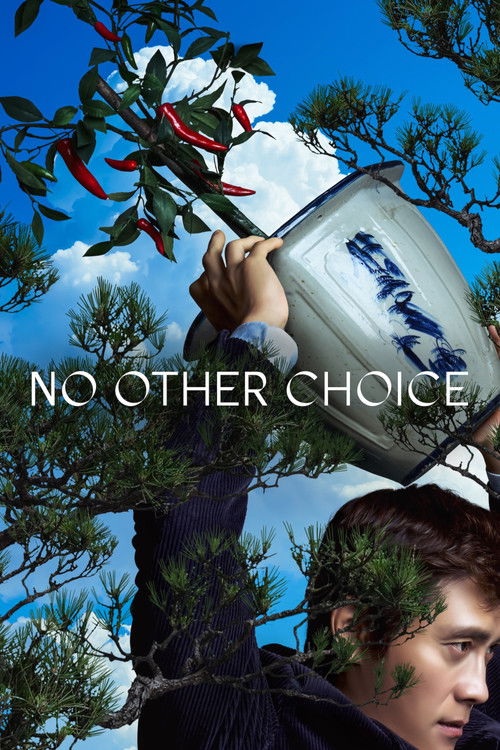
No Other Choice
None or negligible
Park Chan-wook's black comedy about a laid-off paper man who sets out to remove his rivals for a job is a sharp satire of corporate downsizing, but it blames its hero as much as the system and has no identity politics.
Park Chan-wook's adaptation of Donald E. Westlake's novel The Ax follows You Man-su (Lee Byung-hun), a paper-mill manager laid off after 25 years when American buyers take over his company. More than a year later he is still out of work, his wife Miri (Son Ye-jin) has taken a part-time job, the family dogs have been sent away and the house he grew up in is up for sale. Convinced that paper is all he can do, he places a fake job advertisement to find out who his rivals are and decides to remove them.
The film is a satire of the job market. It opens with Man-su rehearsing a plea to the new owners not to make him draw up a list of workers to fire, and 'no other choice', the bosses' excuse, becomes his own as he carries out his plan. Restructuring, outplacement mantras and months of rejection are the backdrop to everything. A second thread mocks male breadwinner pride: Man-su recites that he is the head of the family and tells his son the men must protect their women, while the wives see more clearly.
The film is a satire of the job market. It opens with Man-su rehearsing a plea to the new owners not to make him draw up a list of workers to fire, and 'no other choice', the bosses' excuse, becomes his own as he kills two rival candidates, the wife of one of them and finally the manager whose job he wants. Restructuring, outplacement mantras and months of rejection are the backdrop to everything, and the last scene puts Man-su in a fully automated factory whose whole point is to need fewer workers. A second thread mocks male breadwinner pride: Man-su recites that he is the head of the family and tells his son the men must protect their women, while the wives see more clearly, and Miri ends up sharing his secret.
What keeps the score low is that the film blames its hero as much as the system. The men Man-su targets are not bosses but other laid-off paper men, each with a wife, debts and pride of his own, and 'no other choice' is shown as a self-serving excuse. The critique is about money and work, not identity, the speeches are few and in character, and no political camp is named or flattered.
Score breakdown
Each category is scored 0 to 3: 0 absent or presence only, 1 brief, 2 recurring or plot-relevant, 3 central or dominant. Timestamps refer to the film's running time.
| Category | Score | What we saw |
|---|---|---|
| Content | ||
| A Ethnicity | 0 | Ethnicity never comes up. The cast is Korean, the new owners are identified only as American buyers (0:05:40), and no mixed couple appears. The Native American costumes at the dental clinic's dance party (1:08:30, 1:12:14) are worn without comment. |
| B Gender and feminism | 1 | Male breadwinner pride is a running target: Man-su recites that he is head of the family and will do anything to feed it, tells his son while coaching him for the police that the men must protect their women, and Miri asks why the men in the house all keep secrets from her. Scored 1: it is satire of one man's pride shown through character, not an argument about men and women, and the wives have flaws of their own.
|
| C Sexuality and gender identity | 0 | No LGBTQ characters or themes. Sex appears only between men and women, in Ara's affair with a young actor (0:51:17) and in Man-su's drunken jealousy (1:10:04). |
| D Power and systems | 0 | The job market is the film's subject: foreign buyers cutting a fifth of the line (0:05:40), the end of the job-for-life bargain, a man given minutes to clear out after decades, and an industry heading toward automationa closing scene in a factory automated so that it needs almost no workers. It is framed as money and work rather than the oppression of an identity group, so it is counted under J. |
| E Cultural and historical revision | 0 | An adaptation of Donald E. Westlake's novel The Ax (2:14:29), moved from the United States to present-day Korea with new Korean characters, as local adaptations do. Nothing is recast to carry a message. |
| F Religion portrayal | 0 | Islam is not portrayed, and religion plays no part in the story. |
| K Diverse cast | 0 | The cast is Korean throughout, as the setting would have it, and no character's sexuality or religion is at issue, so there is no mix to count. |
| Treatment | ||
| G Antagonist coding | 0 | The people who do the firing are faceless: the American buyers at the start, who barely appear (0:07:30), and, later, managers for whom cutting staff is routineat the end, executives for whom cutting workers is the whole point of automation. The well-off neighbour who wants Man-su's house is crude and smug (0:20:37). They are coded by money and position, which belongs under J, and no white character stands against a good minority or female side; the film's real menace is Man-su himself. |
| H Didacticism | 0 | The opening protest speech states the case against mass firing outright (0:05:40), and Man-su's account of being shown the door adds a few lines later (1:42:08). Both are about work, not identity, so they are counted under J; both are in character, and the first is a rehearsal on the factory floor. |
| I Message over story | 0 | The story leads: the job hunt, the botched attempts and the police inquiry drive every turn, and the closing scene is the story's own ironic payoff rather than a bend toward a message. No cast mix bends the plot. |
| J Left-leaning politics framed as good | 2 | The satire of corporate downsizing belongs here: foreign owners ordering mass cuts, outplacement mantras, a man shown the door after 25 years and an industry heading toward automationa closing factory built to need almost no workers, with 'no other choice' exposed as the bosses' excuse. Scored 2, not 3: it is shown more than argued, no party or cause is named, and the film blames Man-su's choices as much as the system. Man-su's nostalgia for the old bargain of a job for life in return for no union (0:06:40) looks back to company paternalism rather than a left-wing programme, and the paper industry's insistence that it does not raze forests (0:16:06, 0:26:50) is played for laughs.
|
How the number is reached
- Categories A to K add up to 3 of 33, which gives 1.0 (3 ÷ 33 × 10, rounded to the nearest 0.5).
- Counterweight −0.5: the film refuses to make its victim of the system a hero: Man-su's targets are fellow jobless men rather than bosses, 'no other choice' is shown as his excuse, a wife retorts that the problem is not losing a job but how one deals with it (1:03:58), and the ending turns Man-su's own opening stand against him.Man-su kills fellow jobless paper men, not bosses, chanting 'no other choice' to himself (1:18:51); Ara retorts that the problem is not losing a job but how one deals with it (1:03:58); Man-su tells himself that otherwise the earlier deaths would be meaningless (1:51:48); and once hired he accepts the automation that will cut workers, the opposite of his opening stand (2:02:53).
- Final rating 0.5, none or negligible.
Considered, scored 0
- A Korean cast throughout (K), and the Native American costumes at the dental clinic's dance party (1:08:30, 1:12:14), worn without comment.
- Ri-one, Man-su's daughter, who barely speaks and echoes others' words but is gifted at the cello (1:17:12), shown with love and without a message about disability.
- Miri's first marriage and Man-su raising her son as his own (0:48:07, 0:49:01), family history.
- Miri taking a part-time job and her son's remark that she always said the family killed her career (0:17:00), household facts rather than a point about women and work.
- Man-su's drunken jealousy (1:10:04) and his past violence toward his stepson when drinking (1:11:08), personal failings rather than a statement about men.
- The grandfather's Vietnam War service, the pistol he took from a dead Viet Cong and his later breakdown (0:21:35, 1:27:01, 1:31:46), family history rather than an anti-war statement.
- The move of Westlake's American novel to Korea with new characters (2:14:29), an adaptation's usual relocation rather than a recast.
Evidence and confidence
Confidence: Medium. Full English subtitles from the embedded track of a screener. The track seems to leave out lines spoken in English: the new American owners' visit to the mill is not in the track, though the picture carries a burned-in Korean subtitle (0:07:30). Several stretches, among them parts of the killings and the epilogue (about 2:09 to 2:13), are wordless.
Category F definition: As in the rubric: Islam shown as a peaceful and tolerant religion, aligned with human rights, in a way that works as a corrective message.
Rubric version 3. Reviewed 18 November 2026.