Woke rating
Poor Things
Moderate
A Victorian fantasy whose heroine's sexual and intellectual liberation from the men who try to own her is its whole point, told as an absurdist comedy that also pokes fun at her naive idealism.
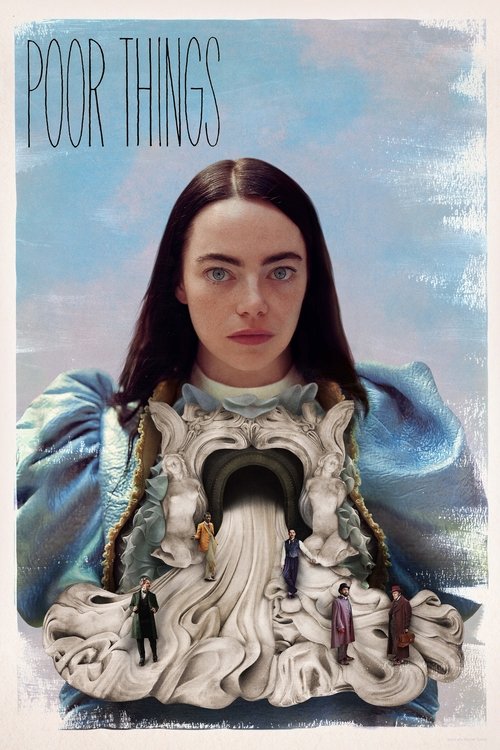
Yorgos Lanthimos's adaptation of Alasdair Gray's 1992 novel follows Bella Baxter (Emma Stone), a young woman brought back to life by the scarred surgeon Godwin Baxter (Willem Dafoe) with the brain of the infant she was carrying. She begins with a child's mind and grows up fast. Godwin keeps her inside his London house and engages her to his student Max McCandles (Ramy Youssef), but she runs off with the lawyer Duncan Wedderburn (Mark Ruffalo) on a journey through Lisbon, a cruise ship, Alexandria and Paris. The world is stylised, partly in black and white, and the sex is frequent and explicit.
The messaging is the story. Each man around Bella tries to contain her: Godwin keeps her indoors as an experiment, the engagement contract confines her to the house, and Duncan, who promises to free her, soon wants to control what she says and where she goes. Bella treats sex as a discovery and polite society as the enemy. On the ship she wonders why Emerson gives no advice to women, and in Alexandria the sight of dead children in a slum turns her toward improving the world. In Paris she takes up work that puts her ideas about sex and independence to the test, alongside a socialist friend, and the last act brings in a man who stands for everything she has been escaping.
The messaging is the story. Each man around Bella tries to contain her: Godwin keeps her indoors as an experiment, the engagement contract confines her to the house, and Duncan, who promises to free her, soon wants to control what she says and where she goes. Bella treats sex as a discovery and polite society as the enemy. On the ship she wonders why Emerson gives no advice to women, and in Alexandria the sight of dead children in a slum turns her toward improving the world. In Paris she works in a brothel, argues that the women should choose their clients, and tells Duncan they are their own means of production on the way to a socialist meeting. Back in London she learns her origin, and Victoria's husband, General Blessington, claims her, threatens to shoot her if she leaves and plans to have her clitoris cut off so she will settle into bearing children. Max, by contrast, tells her it is her body to give freely.
What keeps it in the moderate band is that the comedy cuts more than one way. Bella's charity is naive (she hands Duncan's winnings to ship's crewmen who promise to pass them on) and she admits she does not think things through; the women around her are not idealisedthe brothel's madam is a woman who runs it on rules she calls sick but good business; the cynic Harry gets a full hearing; and Godwin and Max, who also hold her back at first, are drawn with warmth. Ethnicity hardly figures, beyond a few supporting parts cast across ethnicity without comment, among them a character the novel writes as an Englishman; the targets are Victorian conventions rather than present-day parties, and the novel already carries the same themes. Against that, the gender and sexual-freedom message is central and repeated, and the male antagonists are drawn as types of possessiveness, which puts it at the top of the band.
Score breakdown
Each category is scored 0 to 3: 0 absent or presence only, 1 brief, 2 recurring or plot-relevant, 3 central or dominant. Timestamps refer to the film's running time.
| Category | Score | What we saw |
|---|---|---|
| Content | ||
| A Ethnicity | 1 | Ethnicity is never a theme, and no non-white character is held up as flawless: Harry, a Black passenger, is a cynic who admits he set out to hurt Bella. Two couples were weighed. Bella and Toinette, a Black Frenchwoman she meets in Paris, are shown in bed together: step 1 gives 1 for a brief pairing, and neither step 2 nor step 3 applies to a single night between two women of the same Paris house, so 1. Bella's fiancé Max is played by an actor of Egyptian descent but is given no ethnic marker and shares her British upbringing in the film; at most the pair differ slightly in skin colour, so step 3 would take his recurring part from 2 to 1. A is 1.
|
| B Gender and feminism | 3 | The film's spine is Bella's escape from men who confine, correct or claim her, with repeated lines about men's weakness, women's place and male ownership, ending with a husband who wants her mutilated and pregnant and her decision to become a doctor.
|
| C Sexuality and gender identity | 3 | Sexual freedom is the dominant message: Bella's discovery of pleasure is played as liberation, shame and possessiveness as the obstacles, and her later experience is framed as self-discoveryand her sex work is framed as freedom and self-discovery. It ends with a fiancé who accepts her past and a husband who plans to excise her clitoris. No gay or bisexual character is held up as flawless; Bella's night with Toinette is weighed under A.
|
| D Power and systems | 1 | Scored only for the Paris strand, which ties the economics of Bella's new work to womenthe brothel strand, which ties the economics of sex work to women: the madam profits from men's taste for the women's distaste, and Bella answers that the women are their own means of production. The poverty and class critique that drives the plot, from the Alexandria slum to Bella's view that money is a sickness, is not tied to any identity group and is scored under J, and Godwin's knock at how a Christian nation treats suicides (0:22:48) is a passing remark.
|
| E Cultural and historical revision | 1 | An adaptation of Alasdair Gray's 1992 novel, whose Bella also ends with radical views on societybecomes a doctor with radical views on society, so the themes come from the source. One established character is given another ethnicity: Harry Astley, the cynical Englishman Bella meets on her voyage in the novel, is played as a Black man, without comment. Scored 1: a supporting part in one stretch of the film. The story moves from Glasgow to a stylised London, and Max's casting is not counted as a recast (see zeroed).
|
| F Religion portrayal | 0 | Islam is not portrayed; Alexandria appears only as a hotel and a slum seen from above. Religion figures as Godwin's nickname, God, and in his remark about the Christian nation's view of suicide (0:22:48). |
| K Diverse cast | 1 | A few supporting characters are Black in a Victorian European world that would rarely have had them in these places: Harry, a passenger on a luxury liner, and Toinette, Bella's friend in a Paris brothel. Both are shown favourably. The leads are white, and Bella's own sexual exploration is the story, scored under C, so it does not add to the mix; no character's religion is raised.
|
| Treatment | ||
| G Antagonist coding | 2 | The men who try to own Bella are white men drawn as types of male possessiveness, set against a heroine the film sides with throughout: Duncan's libertine charm turns to rage and name-calling once she acts as freely as he does, and the last act's antagonist is a caricature, and the general, a wealthy soldier who calls his life the taking of territory, wants her circumcised and pregnant. Scored 2, not 3: Godwin and Max, who also confine her at first, are loving and forgiven, the brothel's madam, a woman, exploits her, and Harry, a Black man, admits he set out to hurt her.
|
| H Didacticism | 2 | Lines stating the gender and sexual-freedom themes outright recur, from Bella's question about why Emerson gives no advice to women (1:10:15) to later lines about choice and ownershipher case for letting the brothel's women choose their clients, her question to Max about men's desire for ownership, and his answer that her body is hers to give freely (1:57:14). They are short, in character and mostly played for comedy rather than delivered as lectures. Bella's views on improving society and Harry's dismissal of socialism are general politics, scored under J.
|
| I Message over story | 2 | The picaresque is built as a liberation allegory: each man who tries to keep Bella is left behind and diminished, and the last act brings in a figure who exists to voice and enact controla husband who exists to voice and enact patriarchal control. Scored 2, not 3: the fantasy premise motivates the structure, and the comedy keeps Bella herself fallible.
|
| J Left-leaning politics framed as good | 2 | Socialism is welcomed, poverty and class run through the middle of the film, and polite society, sexual convention and possessive marriage are cast as the enemy: the Alexandria slum turns Bella toward improving the world and against money itself. Scored 2, not 3: the overt politics is a sketch carried by a few scenes and lines, the targets are Victorian conventions rather than a present-day camp, and the film's feminism is scored under B.
|
How the number is reached
- Categories A to K add up to 18 of 33, which gives 5.5 (18 ÷ 33 × 10, rounded to the nearest 0.5).
- Counterweight −0.5: the film mocks its heroine's idealism and does not idealise the women around her: Bella's charity is naive and she admits she does not think things through (1:25:04), she finds cruelty bubbling up in herself (1:15:16), Harry's cynicism gets a full hearing (1:23:14), and the men who first confine her, Godwin and Max, are drawn with warmth.Bella hands Duncan's winnings to crewmen who promise to pass them to the poor (1:19:28, 1:22:08) and admits she does not think things through (1:25:04); she finds cruelty bubbling up in herself (1:15:16) and learns that her former self was unkind (2:04:22); the madam, a woman, exploits the workers for good business and bites Bella's ear (1:35:21, 1:36:06); Harry's cynicism, which lumps socialism with religion and capitalism, gets a full hearing (1:23:14); and Godwin and Max are forgiven and loved (1:55:39, 1:57:40).
- Final rating 5.0, moderate.
Considered, scored 0
- Harry, a Black passenger on the cruise and Bella's intellectual sparring partner (1:06:30, 1:16:30), a cynic who admits he wanted to hurt her (1:23:02), so not a flawless portrayal (A); his casting is counted under E and K.
- Max McCandles played by Ramy Youssef, an actor of Egyptian descent (1:50:30, 2:12:30), in a role the novel writes as a Scottish medical student. The film gives Max no ethnic marker and the casting is not visibly a change of ethnicity, so it is not counted under E or K; his engagement to Bella comes to no more than 1 under A.
- Bella's night with Toinette (1:47:30) as a same-sex encounter, shown without comment; it counts only under A's on-sight rule, while C is scored for the sexual-freedom message as a whole.
- The explicit sex and nudity as such; the score counts how the film frames sex, not how much it shows.
- Max's crude remark on first seeing Bella (0:07:29), a line in character.
- Godwin's accounts of his father's experiments on him (0:17:42, 0:27:56, 1:00:07), backstory with no social message.
Evidence and confidence
Confidence: Medium. Full English subtitles from the embedded track. The track starts at 0:04:37, so the opening minutes have no subtitled dialogue, and a few French words in the Paris scenes are left as spoken (1:33:35).
Category F definition: As in the rubric: Islam shown as a peaceful and tolerant religion, aligned with human rights, in a way that works as a corrective message.
Rubric version 3. Reviewed 18 November 2026.