Woke rating
Power Ballad
None or negligible
A warm music comedy about a wedding singer who hears his song become another man's hit; a couple of one-line jokes are all there is to score, and the film undercuts both.
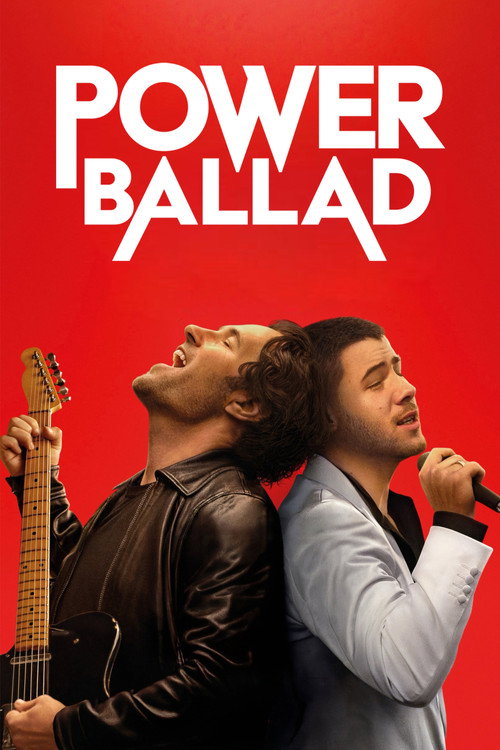
John Carney's comedy follows Rick Power (Paul Rudd), a Kansas City musician who stayed in Dublin for his Irish wife and daughter and now sings covers in a wedding band. At a castle wedding he jams through the night with Danny Wilson (Nick Jonas), a former boy-band star desperate to be taken seriously, and helps him shape some songs. Weeks later one of Rick's own songs is a worldwide hit under Danny's name, and Rick sets out to get the credit.
There is little to score. Rick's teenage daughter waves away his ballad about a lonely woman with a one-line feminist joke, and a quip in the manager's office takes a swipe at the presidency. Danny's girlfriend Marcia is East Asian, but the two are Americans in Los Angeles who differ only in skin colour, and she has two short scenes, so the couple does not count. The music business, from the label that dropped Rick to the manager who threatens him with lawyers, comes off as cynical, but that is one industry's grubbiness, not a political point. A wedding Rick plays is for two brides, shown without comment.
What keeps the score at the bottom of the scale is that the film is about authorship, envy and family, and none of it is argued. The pop star gets his say about the work of turning a tune into a hitDanny gets to argue that turning a tune into a hit is the hard part, and Rick concedes it, and Rick's crusade costs him his band and nearly his family. The ending puts fatherhood ahead of fame.The payoff is that the song was written for Rick's baby daughter, and staying home for her was the best choice he ever made.
Score breakdown
Each category is scored 0 to 3: 0 absent or presence only, 1 brief, 2 recurring or plot-relevant, 3 central or dominant. Timestamps refer to the film's running time.
| Category | Score | What we saw |
|---|---|---|
| Content | ||
| A Ethnicity | 0 | Ethnicity never comes up, and no non-white character is held up as flawless. Danny and his girlfriend Marcia, who is East Asian, share two scenes in the first half (0:28:50, 0:37:28), so as a brief couple they would start at 1; both are Americans in the Los Angeles entertainment world, differing only in skin colour, so one point comes off, giving 0. Rick, from Kansas City, and his Irish wife share a language and a Western way of life, so their marriage does not count either. |
| B Gender and feminism | 1 | One line: Rick's daughter Aja dismisses his ballad's lonely heroine as out of date. It is a teenager's eye-roll at her dad, played for comedy, and he shrugs it off.
|
| C Sexuality and gender identity | 0 | No LGBTQ theme. A wedding Rick's band plays is for two brides, shown without comment. |
| D Power and systems | 0 | A light, recurring jab at the music business: a label that drops an artist for taking time off (0:22:42), and a manager who uses lawyers to make an inconvenient claimant go away (0:48:43). It is one industry's cynicism in a personal story, tied to no group and to no political side. |
| E Cultural and historical revision | 0 | An original story. No established characters or history are recast. |
| F Religion portrayal | 0 | Islam does not feature, and religion plays no part in the story. |
| K Diverse cast | 0 | The cast is essentially white Irish and American: Rick and his family, his Dublin bandmates, Danny and his manager. Marcia is the one minority character with a part, the concert and party crowds in Los Angeles are extras, the two brides appear only at their wedding, and religion plays no part. |
| Treatment | ||
| G Antagonist coding | 0 | There are no ideological villains. Danny is driven by ambition and his fear of being written off as a boy-band act, and Mac by protecting his client's money; neither is defined by a group. The hero is a white man too, so the moral sides do not divide along ethnicity or sex. |
| H Didacticism | 0 | No speeches state a message. The closing words about songs belonging to their listenersDanny's closing line that a song is about the people listening, not who wrote it (1:29:01), concern music, not politics. |
| I Message over story | 0 | The story leads: the plot turns on envy, pride and family, and nothing bends toward a message. |
| J Left-leaning politics framed as good | 1 | One brief political jab, which also nods at cancel culture. Nothing else in the film takes a political side.
|
How the number is reached
- Categories A to K add up to 2 of 33, which gives 0.5 (2 ÷ 33 × 10, rounded to the nearest 0.5).
- Counterweight −0.5: The film undercuts what little it scores: the one political quip ribs cancel culture as well as the presidency (0:30:20), and Aja's feminist line is a teenager's eye-roll that her father shrugs off (0:34:17).
- Final rating 0.0, none or negligible.
Considered, scored 0
- Danny and Marcia, a white and an East Asian American who differ only in skin colour, in two brief scenes (0:28:50, 0:37:28) (A).
- Rick, an American from Kansas City, and his Irish wife (0:14:32, 0:16:02), who share a language and a Western way of life (A).
- A wedding for two brides, Aisling and Laura (0:51:12, 0:52:30), shown without comment (C, K).
- Rick's sour wedding toast about partying until the sun burns us off the planet, which he says is not really a joke (0:51:47), a bitter aside rather than a climate message.
- Mixed crowds at Danny's Los Angeles concert and party (1:05:30, 1:09:30), extras shown without comment (K).
Evidence and confidence
Confidence: Medium. Full English subtitles from the embedded track, including song lyrics. The HDR source makes much of the picture dark and washed out, so background detail is hard to check in places.
Category F definition: As in the rubric: Islam shown as a peaceful and tolerant religion, aligned with human rights, in a way that works as a corrective message.
Noted, not scored: Family comes first: Rick gave up a label career to stay with his wife and daughter (0:22:42, 0:55:47), and he tells Danny that staying for his newborn daughter was the best decision of his life (1:18:26). An end-credits song also uses 'woke' as an insult (1:37:04).
Rubric version 3. Reviewed 18 November 2026.