Woke rating
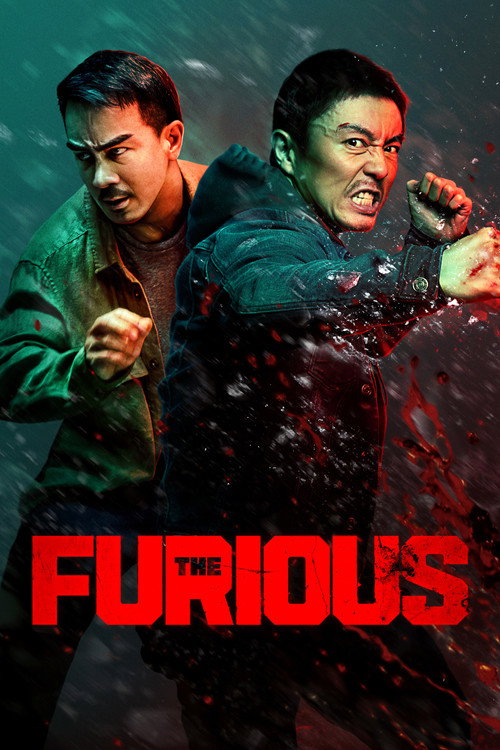
The Furious
None or negligible
A martial-arts thriller about a father fighting his way through a child-trafficking ring to find his daughter, with no progressive messaging beyond a brief picture of police who look away when the city's poorest children go missing.
Kenji Tanigaki's martial-arts thriller follows Wang Wei (Xie Miao), a quiet Chinese handyman working in an unnamed Southeast Asian city, whose teenage daughter Rainy is spending the summer with him before going back to China. When she is lured away and snatched by a child-trafficking ring and the police brush him off, he teams up with Navin (Joe Taslim), a journalist whose wife Mattia vanished while investigating the ring's boss, Mr. Song. The dialogue mixes English, Mandarin and Thai, and most of the running time is fights.
The rubric's one point of contact is the backdrop. Mattia's research holds that the ring takes children from the city's poorest neighbourhoods while the police treat each case as isolated, a captain sends Wang away citing procedure, and Song hints that the police are on his payroll. In the last act the police brass get in the way of a rescue, and a crowd outside turns on them.
The rubric's one point of contact is the backdrop. Mattia's research holds that the ring takes children from the city's poorest neighbourhoods while the police treat each case as isolated, a captain sends Wang away citing procedure, and Song hints that the police are on his payroll. In the last act Navin livestreams from the building where the children are held, the captain orders his officers to clear the street rather than go in, and the crowd outside calls the police cowards while Rainy lowers children from a window. The man behind Song turns out to be a tycoon's son-in-law, whom the family disowns once the trade in children comes out.
What keeps the score at the bottom is that nothing is argued. The police failure is genre machinery, and the film does not leave it at that: a female sergeant defies her captain, officers comfort the rescued children, and she later vouches for Wang. The villains are gangsters and the man who bankrolls them, moved by money and, in the end, by grief and revenge. There are no speeches, no identity themes and no politics; the film's subject is a father who left his daughter after her mother's death and has to win her back.
Score breakdown
Each category is scored 0 to 3: 0 absent or presence only, 1 brief, 2 recurring or plot-relevant, 3 central or dominant. Timestamps refer to the film's running time.
| Category | Score | What we saw |
|---|---|---|
| Content | ||
| A Ethnicity | 0 | No ethnicity theme. Villains call Wang 'the Chinese mute' as an insult (0:52:52, 1:25:38), no character is held up as a flawless victim of another group, and no mixed couple is seen. |
| B Gender and feminism | 0 | No gender message. Rainy's worry about being called a tomboy (0:12:27) and her courage among the captive children are character, and the female police sergeant is shown without comment on her sex. |
| C Sexuality and gender identity | 0 | No LGBTQ content. |
| D Power and systems | 0 | The ring preys on the city's poorest children while the police look away, but the point is about class and police failure rather than a group defined by identity, so it counts under J. |
| E Cultural and historical revision | 0 | An original story. No established characters or history are recast. |
| F Religion portrayal | 0 | Religion does not come up. |
| K Diverse cast | 0 | The cast is Chinese, Thai and other Southeast Asian, in an unnamed Southeast Asian city where a Chinese handyman works; that is the mix the setting would have. No character's sexuality or religion is marked, so nothing adds to a mixed cast. |
| Treatment | ||
| G Antagonist coding | 0 | The villains are a trafficker, his enforcers and the man who bankrolls him, moved by money and, for the son-in-law, by grief over the child he was about to have (1:25:38). Heroes and villains alike are Asian men and women of the same city, so nothing lines up with ethnicity, and the obstructive police captain is set against a female sergeant only as genre machinery, counted under J. The tycoon whose building was used is shown disgusted by the trade in children (1:15:27). |
| H Didacticism | 0 | No speeches. Navin's livestream appeal for viewers to share the video (1:00:55) is a plot device, not a message. |
| I Message over story | 0 | The story leads throughout. |
| J Left-leaning politics framed as good | 1 | The one brush with politics is the backdrop of police who look away while the ring takes children from the poorest neighbourhoods: the point is made in one early line and carried by a captain who stonewallsstonewalls and then blocks a rescue. Scored 1: it is a genre backdrop rather than an argument, and individual officers are shown doing their duty (1:10:30, 1:13:40, 1:18:33).
|
How the number is reached
- Categories A to K add up to 1 of 33, which gives 0.5 (1 ÷ 33 × 10, rounded to the nearest 0.5).
- No counterweight: None needed. The film does complicate its one critique: a female sergeant defies her captain (1:10:30), officers comfort the rescued children (1:13:40) and she vouches that Wang acted in self-defence (1:18:33). But that is already why J stays at 1.
- Final rating 0.5, none or negligible.
Considered, scored 0
- Rainy's complaint that kung fu makes her classmates call her a tomboy, and her father's answer that he would rather she could protect herself than be pretty (0:12:27, 0:12:32): a family quarrel, not a point about girls.
- Rainy's courage among the captive children, leading an escape and going back for the others (1:02:37, 1:07:21), character rather than a statement about girls.
- A female police sergeant who pushes back against her captaindefies her captain to reach the children (1:10:30), shown without comment on her sex.
- Villains calling Wang 'the Chinese mute' (0:52:52, 1:25:38), an insult in character.
- Navin's marriage to Mattia, heard on the phone (0:01:15) and seen in a photo (0:24:30), with nothing said about either's background, so not counted as a mixed couple (A); a cast of Chinese, Thai and other Asian characters (0:21:30, 0:22:30), the people of the setting, shown without comment (K).
Evidence and confidence
Confidence: Medium. The file has no English text subtitles, so the English dialogue comes from a transcript of the audio, and the Mandarin and Thai lines from the forced English track. The transcript garbles or runs together some lines (for example in Song's club, 0:26:34 to 0:26:40, and at the police station, 0:21:36 to 0:22:23), and a few short foreign-language lines carry no translation. Long fight scenes have little or no dialogue. The picture is dark from the HDR source.
Category F definition: As in the rubric: Islam shown as a peaceful and tolerant religion, aligned with human rights, in a way that works as a corrective message.
Noted, not scored: The film's values are those of a protective father: Wang tells the sergeant who asks who he really is that he is just a father (1:19:02), and Navin regrets having wanted to leave the country rather than stand by his wife's search for the missing children (1:20:22).
Rubric version 3. Reviewed 18 November 2026.