Woke rating
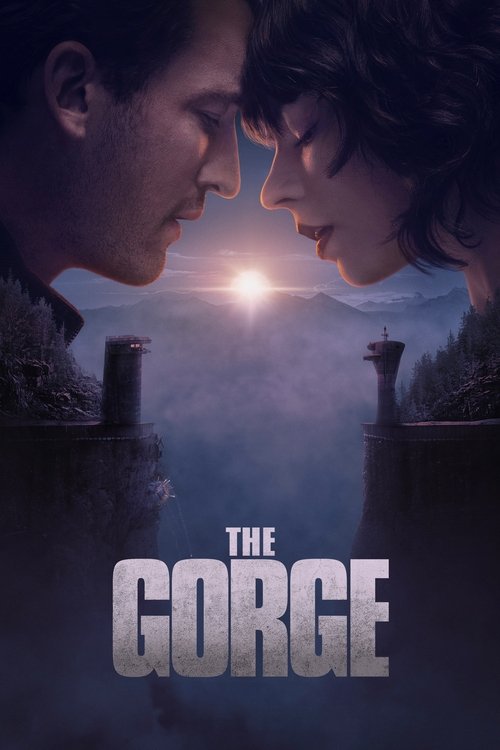
The Gorge
None or negligible
A sci-fi romance about two snipers guarding opposite rims of a secret gorge, with no identity messaging; its only brush with politics is the genre's stock distrust of secret programmes and the people who fund them.
Scott Derrickson's genre hybrid sends Levi (Miles Teller), a former US Marine sniper, to spend a year guarding the west rim of a hidden gorge, while Drasa (Anya Taylor-Joy), a Lithuanian sniper working for Moscow, guards the east rim. Contact is forbidden, but they strike up a friendship across the chasm with signs and binoculars, then a romance, before the gorge itself forces them to fight side by side against the creatures that live in it.
There is almost no identity messaging. The cast is small: two white leads, a Black British commando who hands over the post, and an American executive glimpsed on the phone. The one strand of critique is the genre's familiar distrust of secret programmes: the gorge has been hidden for decades by a pact between East and West that no head of state has known about, and the truth about what the guards are protecting comes out late in the film.
There is almost no identity messaging. The cast is small: two white leads, a Black British commando who hands over the post, and an American executive glimpsed on the phone. The one strand of critique is the genre's familiar distrust of secret programmes: the creatures are the mutated victims of a 1946 biochemical weapons lab run jointly by East and West, and a private defence firm, Darklake, is still harvesting their DNA to build super soldiers. Its executive orders Levi to kill Drasa and flies in with an armed team, Levi rigs the cloakers so that the gorge is destroyed, and the lovers meet again in France.
What keeps the score at zero is that the villain is a genre fixture with a plainly stated motive, not a case against capitalism or the military, and the heroes are hired guns from both sides of the old divide. The film treats military service with respect and makes nothing of its characters' ethnicity or sex.
Score breakdown
Each category is scored 0 to 3: 0 absent or presence only, 1 brief, 2 recurring or plot-relevant, 3 central or dominant. Timestamps refer to the film's running time.
| Category | Score | What we saw |
|---|---|---|
| Content | ||
| A Ethnicity | 0 | No ethnicity theme. JD, the Black British commando who hands over the post, is a likeable soldier in a few early scenes, not a figure held up as flawless, and the only couple, Levi and Drasa, are both white. |
| B Gender and feminism | 0 | No gender message. Drasa is Levi's equal as a sniper and a fighter, and the executive behind the post is a woman, but nothing is made of either's sex; both are listed under 'zeroed'. |
| C Sexuality and gender identity | 0 | No LGBTQ+ content. The one romance is between a man and a woman. |
| D Power and systems | 0 | Secret programmes and the people who run thema private defence firm are the late-film villains: the gorge was hidden by a coalition no president knew about (0:17:13), its creatures come from a 1946 weapons lab, and a corporation is still exploiting them to build super soldiers (1:21:48). It is a genre given carried by a few lines of exposition, aimed at secrecysecrecy and one firm rather than at a system oppressing a group, and it is not framed as a case against capitalism or the military, so it scores nothing under J either. |
| E Cultural and historical revision | 0 | An original story. No established characters or history are recast. |
| F Religion portrayal | 0 | Islam does not feature. |
| K Diverse cast | 0 | The cast is small and essentially white: Levi, Drasa, her father and the executive. JD, the Black British commando, is the one minority character with a real part, and he leaves the story early; the commander of the late armed team is on the villains' side. Sexuality and religion play no part. |
| Treatment | ||
| G Antagonist coding | 0 | The antagonists are the creatures in the gorge and, late on, the people who run the postthe Darklake executive and her armed team. The executive is a woman and states her motive plainly (1:43:03), treating Levi as her personal mistake (1:44:32), while the heroes are a white man and a white woman, so the moral sides do not divide along ethnicity or sex, and no one is defined by faith or politics. |
| H Didacticism | 0 | No speeches state a progressive message. The talk about truth and secrecy (0:56:23, 1:49:56) is the film's theme, not a political argument, and the account of the gorge's originthe weapons lab and the corporation is plot exposition. |
| I Message over story | 0 | The story leads. The corporate reveal follows from the mystery the film sets up from the start. |
| J Left-leaning politics framed as good | 0 | No political camp is framed as good or bad. The film is warm toward an American Marine and a Moscow assassin alike, and its corporate villain is a genre fixture with a stated motive, not a case against capitalism or the military. |
How the number is reached
- Categories A to K add up to 0 of 33, which gives 0.0 (0 ÷ 33 × 10, rounded to the nearest 0.5).
- No counterweight: None needed, as nothing is scored. The film does complicate its one critique: the secret is kept by East and West together (0:17:13), and the heroes belong to the same world as the villain: Levi has worked for eleven private contractors (0:05:38) and Drasa kills for Moscow (0:08:18). The people behind the post get a stated aimThe executive's aim of military advantage is stated plainly (1:43:03), and the 1946 scientists are shown as people who regret what they unleashed (1:20:47).
- Final rating 0.0, none or negligible.
Considered, scored 0
- JD Drake, the Black British Royal Marine who hands over the post (0:14:14, 0:14:30 to 0:19:30), the one minority character with a real part, shown without comment (A, K).
- Drasa as an elite sniper and fighter who, Levi learns, made the world-record shot (1:40:08), with nothing said about her sex.
- A woman as the executive behind the post (0:22:30, 1:44:30), with nothing said about her sex.
- Drasa's father's decision to end his own life on Valentine's Day (0:10:27), which she protests (0:10:32) and later mourns (1:01:19): a family matter, not an argument for assisted dying.
- No mixed couple: Levi and Drasa, the only romance, are both white (0:52:30, 1:00:30).
Evidence and confidence
Confidence: Medium. Full English subtitles (embedded track, with the forced track translating the lines in other languages). Long stretches have little or no dialogue, chiefly 0:28:53 to 0:47:28, when the two leads talk across the gorge with written signs, and much of the action below; many of these scenes are very dark. The last ten minutes are credits.
Category F definition: As in the rubric: Islam shown as a peaceful and tolerant religion, aligned with human rights, in a way that works as a corrective message.
Noted, not scored: Military service is treated with respect: Levi's father and grandfather served and he still answers when the Marines call (0:05:19, 0:05:47), JD is thanked for his service (0:22:15), and Levi's hunting childhood with his father is remembered fondly (0:57:03).
Rubric version 3. Reviewed 18 November 2026.