Woke rating
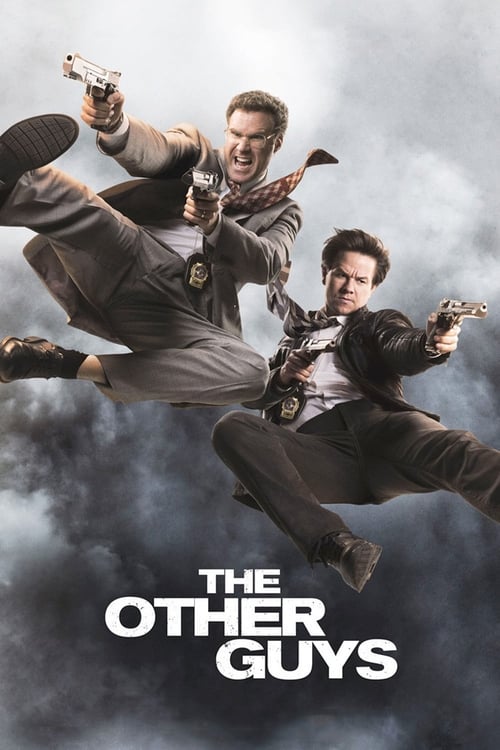
The Other Guys
None or negligible
A buddy-cop parody whose villain is a crooked Wall Street investor; it saves its anti-banker message for the epilogue and an end-credits lecture on the financial crisis, and otherwise keeps its jokes free of politics.
Adam McKay's comedy follows two New York detectives nobody takes seriously: Allen Gamble (Will Ferrell), a forensic accountant happiest doing other people's paperwork, and Terry Hoitz (Mark Wahlberg), a hothead stuck at a desk since he shot Derek Jeter at the World Series. When the precinct's star detectives die in a stunt, the pair chase what looks like a petty scaffolding-permit case against the billionaire investor David Ershon (Steve Coogan), and it grows into a fraud worth billions. Most of the running time goes on improvised riffs, car chases, Terry's jealousy and Allen's marriage to Sheila (Eva Mendes).
The messaging is about Wall Street. Ershon has lost a client $32 billion and is hunting for a 'sucker' to cover it, the regulator the detectives hand their evidence to is his friend, and the captain admits Ershon is connected to everyone who matters. Once the story is over, the epilogue and the end credits step out of the comedy to make the point directly, with infographics on how a Ponzi scheme works, AIG's executive bonuses, executive pay and ordinary Americans' retirement savings.
The messaging is about Wall Street. Ershon has lost Lendl Global $32 billion and is hunting for a 'sucker' to cover it, the SEC investigator the detectives hand their evidence to is his lawyer and squash partner, and the captain admits Ershon is connected to everyone who matters. The sucker turns out to be the police pension fund. Once the story is over, the epilogue says the government bailed Lendl out with TARP money because it was too big to fail and teases a case against Goldman Sachs, and the end credits make the point directly, with infographics on how a Ponzi scheme works, AIG's executive bonuses, executive pay and ordinary Americans' retirement savings.
What keeps the score low is that, until those last minutes, the fraud is mostly a peg for jokes. Ershon is a fop who bribes the heroes with courtside seats and Broadway tickets, and he has plain personal motives: losses to cover and dangerous creditors. The film mocks everyone, Terry's machismo, Allen's therapy-speak and his Prius included, and its gay and ethnic jokes carry no message.
Score breakdown
Each category is scored 0 to 3: 0 absent or presence only, 1 brief, 2 recurring or plot-relevant, 3 central or dominant. Timestamps refer to the film's running time.
| Category | Score | What we saw |
|---|---|---|
| Content | ||
| A Ethnicity | 0 | Ethnicity is never a theme. Allen, who is white, is married to Sheila, played by Eva Mendes, whose mother is Mama Ramos; a Latino partner does not by itself make a couple mixed, and both are Americans whose one difference, Episcopalian against Catholic, is a punchline (0:32:44), so the marriage is listed under zeroed. The Black detectives, the star duo Danson and Highsmith and the rival Fosse, are spoofs and jerks, not flawless figures. One passing joke, the rival detectives telling schoolchildren that one way to stay out of jail is to try not to be black or Hispanic (1:32:29), is a gag with no message. |
| B Gender and feminism | 0 | Gender is not argued. Terry's insults about Allen's unmanly ways, Ershon calling his CEO overwrought because she is a woman (0:24:01) and Allen's 'Female Body Inspector' mug (0:47:30) are jokes at the speakers' expense. Sheila is a doctor and Lendl's CEO is a woman, both without comment. |
| C Sexuality and gender identity | 0 | No LGBTQ theme. The captain's running line that his son is bisexual and Terry's jokes about mocking 'queer' boys are gags at the speakers' expense, with no gay character portrayed; see 'zeroed'. |
| D Power and systems | 0 | Corporate fraud drives the plot, the regulator is shown as captured, and the ending indicts the financial industry and the bailout directly. The target is Wall Street in general, not institutions oppressing an identity group, so it is counted under J. |
| E Cultural and historical revision | 0 | An original comedy. Derek Jeter appears as himself in a gag, and no established characters or history are recast. |
| F Religion portrayal | 0 | Islam does not feature. Religion comes up only in Sheila's joke that people are shocked by her marriage because Allen is Episcopalian and she is Catholic (0:32:44). |
| K Diverse cast | 0 | The leads and villains are white, and Sheila's Latino background does not count as non-white. The Black detectives Danson, Highsmith and Fosse are the mix a New York police precinct would really have, and two of them are spoofed, so nothing goes beyond the setting. There are no gay characters on screen and no religious difference beyond a joke. |
| Treatment | ||
| G Antagonist coding | 0 | The villains are financiers and the firm behind them, and the epilogue widens the blame to a bailed-out industry, coded by wealth and greed rather than by a demographic group; that side is counted under J. Each has a personal motive (Ershon must cover his losses and his debts, his creditors want their money back), and Ershon is played as a harmless fop rather than a symbol. The heroes are white men too, so the moral sides do not divide along ethnicity or sex. |
| H Didacticism | 0 | No character lectures. The anti-Wall Street message is stated directly only after the story is over, in the epilogue narration and the end-credits infographics; it is general politics, counted under J, and no identity message is stated. |
| I Message over story | 0 | The story leads. The fraud plot follows its own comic logic, and the critique arrives only after it has ended, as an epilogue twist and a credits sequence. |
| J Left-leaning politics framed as good | 2 | Anger at Wall Street is the film's politics: corporate fraud drives the plot, the regulator is shown as captured, and once the story is over the epilogue indicts the bailout and the end credits set executive pay and bonuses against ordinary Americans' savings and the cops' own pension fund, a left-populist framing. Scored 2, not 3: for most of the running time the case is a comic MacGuffin, the explicit critique is packed into the last minutes, no party or policy is named, and anger at the bailout and the regulators cuts across left and right.
|
How the number is reached
- Categories A to K add up to 2 of 33, which gives 0.5 (2 ÷ 33 × 10, rounded to the nearest 0.5).
- Counterweight −0.5: The villain is a buffoon with personal motives rather than a stand-in for his class: he has lost billions and owes dangerous people (0:09:33, 1:20:27) and admits he simply lost other people's money (1:24:35). The blame falls on the regulator and the government as much as on business (1:07:06, 1:39:41), and the film takes swipes at liberal markers too, from Allen's Prius found 'trying to vote for Ralph Nader' (0:35:02) to his hope that nine million socially conscious citizens will step up instead of heroes (0:16:59).
- Final rating 0.0, none or negligible.
Considered, scored 0
- Gay jokes: the captain's son exploring his bisexuality (0:13:10, also 0:59:04), Terry saying he learned to dance to mock how 'queer' other boys were (0:45:37) and the epilogue's harp learned to mock 'the fairy' up the street (1:40:17).
- Allen and Sheila, a white man and a Latina woman, as a recurring married couple (0:32:11, 1:01:36): a Latino partner does not by itself make a couple mixed, and her joke that people are shocked because he is Episcopalian and she is Catholic (0:32:44) is a punchline, not a culture gap (A).
- Francine's dance partner, a Black man (0:43:30, 0:44:30); Terry asks if he is her new boyfriend and she says he is only her dance partner (0:44:09), so no couple is counted. Terry and Francine are both white.
- An ethnically mixed police squad, including the star detectives Danson and Highsmith and the detective Fosse (0:15:30, 0:19:30, 1:32:30), the mix a New York precinct accounts for (K), and the joke calling Jeter an angel of mixed parentage (0:11:23).
- Satire of action-film policing: the stars cause $12 million of damage over a quarter pound of marijuana (0:03:22) and the squad's 'desk pop' hazing (0:12:00), played as comedy rather than a critique of the police.
- Ershon's Chechen and Nigerian creditors (1:20:27), genre heavies described by nationality.
Evidence and confidence
Confidence: Medium. Full English subtitles from the file's embedded track. No gaps in the dialogue were found. The end-credits infographics (1:41:30 to 1:44:30) were not read in full.
Category F definition: As in the rubric: Islam shown as a peaceful and tolerant religion, aligned with human rights, in a way that works as a corrective message.
Rubric version 3. Reviewed 18 November 2026.