Woke rating
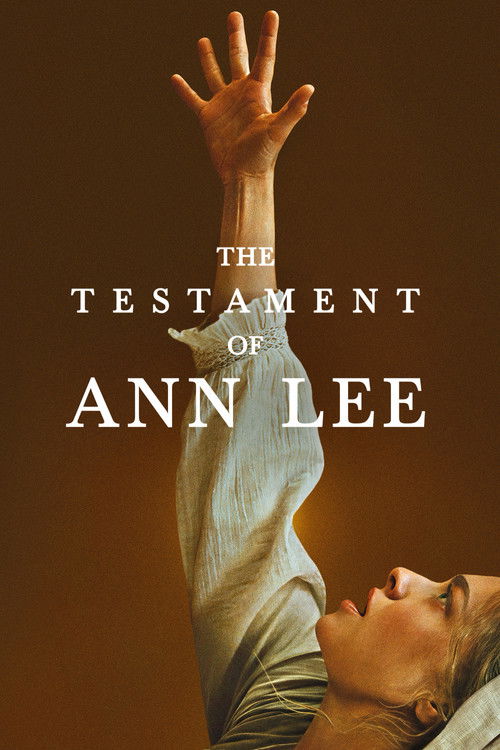
The Testament of Ann Lee
Mild
A musical biopic of the Shakers' founder whose woman-preacher theme and female-messiah doctrine give it a mild feminist tilt, though its real subject is faith, celibacy and religious persecution rather than modern politics.
Mona Fastvold's musical biopic follows Ann Lee (Amanda Seyfried), a Manchester blacksmith's daughter born in 1736 who joins the 'Shaking Quakers', loses her four infant children, becomes the group's leader, 'Mother Ann', and in 1774 takes a handful of followers to America. Narrated by her follower Mary, it is told largely through Shaker hymns and ecstatic worship-dance, with long stretches of song and little conventional dialogue.
The messaging sits mainly in the Shakers' own doctrine. The Wardleys introduce a woman preacher to a doubtful room and teach that Christ will return as a woman and that God is both male and female, and the sermon is repeated in America. Ann's horror of 'fleshly cohabitation' is rooted in what she sees of her father and suffers from her husband, and some of the hostility she meets is hostility to a woman who preaches. A short scene at a New York slave auction has the Shakers shouting 'Shame', and late lines endorse pacifism and equal rights.
The messaging sits mainly in the Shakers' own doctrine. The Wardleys introduce a woman preacher to a doubtful room and teach that Christ will return as a woman and that God is both male and female, and the sermon is repeated in America. Ann's horror of 'fleshly cohabitation' is rooted in what she sees of her father and suffers from her husband, who in America demands his marital rights, brings home a paid woman and leaves her. Some of the hostility she meets is hostility to a woman who preaches: the mob at Petersham strips her to examine her sex and beats her brother William, who later dies. A short scene at a New York slave auction has the Shakers shouting 'Shame', and late lines endorse pacifism and equal rights.
What keeps the score low is that the film's core is not gender politics but the Shaker teaching that sexual desire is the root of sin, and it treats that teaching, the visions and the worship with complete seriousness. The female-Christ idea is presented as the sect's historical belief rather than a modern gloss, and the film does not idealise the sect: its absolutism costs Ann people she lovesAnn's rule drives out her own niece and the young man she loves, William asks whether their love is really sinful, and Ann is shown to be unable to read. Her husband is given a real grievance, and the authorities who arrest her also let her goalso let her go, both in Manchester and in New York.
Score breakdown
Each category is scored 0 to 3: 0 absent or presence only, 1 brief, 2 recurring or plot-relevant, 3 central or dominant. Timestamps refer to the film's running time.
| Category | Score | What we saw |
|---|---|---|
| Content | ||
| A Ethnicity | 1 | Ethnicity comes up in one scene: on arriving in New York the Shakers come upon a slave auction and protest it, the enslaved men shown as blameless victims. Black sisters appear later in the community without comment and without a real part, so nothing else under A counts, and no mixed couple appears.
|
| B Gender and feminism | 2 | A woman's right to preach and the idea of a female Christ run through the film as Shaker doctrine, and Ann's suffering at the hands of men is a recurring thread, from her father to her husband to the mob that strips her. Scored 2, not 3: the film never argues for women's rights as such; Ann's message is celibacy and confession, and her closest allies are men.
|
| C Sexuality and gender identity | 0 | No LGBTQ characters or themes. The film's teaching runs the other way from sexual-freedom advocacy: celibacy is its core doctrine and the mob's taunt that Ann is not a woman is part of an assault, not a gender-identity theme. |
| D Power and systems | 1 | Ann is jailed, tried and mobbed for her preaching, and the narration casts the Church of England's doctrines as oppressive: persecution of a religious minority led by a woman. It is part of the historical story and comes mostly from crowds; the authorities also let her goalso release her, and the governor of New York condemns jailing people for their beliefs, so the critique stays brief. The early sermon on the poor under brutal laws has no identity angle and is counted under J.
|
| E Cultural and historical revision | 0 | A biopic of a historical figure, with legends flagged as legends in the narration (0:47:44). No established characters are recast, and the female-Christ belief is presented as the sect's own doctrine. |
| F Religion portrayal | 0 | Islam does not appear. |
| K Diverse cast | 0 | The characters with a real part are the white English and American Shakers of the true story, their families and their persecutors. A few Black sisters appear in the community's later montages (1:44:30, 1:48:30) without a real part, as early Shaker communities did take in Black members. The religious divide between the sect and the established church is the plot, and no character's sexuality is at issue, so nothing counts. |
| Treatment | ||
| G Antagonist coding | 1 | Ann's persecutors are mostly white men: her father, churchgoers crying blasphemy, jeering sailors and mobs who call her a witch, set against a woman preacher. Scored 1, not more: her closest and most loyal followers are men too, women join the hostility (0:48:35), and the main personal antagonist, her husband, has his own grievance, so the moral sides do not divide along sex throughout.
|
| H Didacticism | 1 | Sermons state the female-Christ doctrine directly, and Ann's line at the slave auction voices the film's sympathies, but they are short and in character for a film about preachers. Most of the preaching is about sin, confession and chastity; Ann's hope for equal rights after Yorktown is general politics, counted under J.
|
| I Message over story | 0 | The story follows Ann's life and mission. The slave-auction scene is a brief stop on the way that does not change its course, and no cast mix bends the plot. |
| J Left-leaning politics framed as good | 1 | Positions now coded as progressive are framed favourably: a woman leading a church, an early sermon for the poor against the established church, refusal to fight in the war, opposition to slavery and a hope for equal rights. They come wrapped in an 18th-century sect whose central teachings, celibacy and confession of sin, map onto no modern political side.
|
How the number is reached
- Categories A to K add up to 7 of 33, which gives 2.0 (7 ÷ 33 × 10, rounded to the nearest 0.5).
- Counterweight −0.5: the film does not idealise the sect or flatten everyone outside it: Jane Wardley tells Ann marriage is no sin (0:29:26), Ann's rule costs her people she loves, her husband is given a real grievance, Hocknell confesses his own contempt for an outsider (1:15:19), and the Manchester ministers let her go (0:48:06).Jane Wardley tells Ann marriage is no sin (0:29:26); Ann's rule drives out her niece Nancy and Richard while William asks whether their love is sinful (1:10:33); Abraham's grievance after six years of abstinence is heard (1:19:24) and he exposes that Ann cannot read (1:20:27); Hocknell confesses his own contempt for the boatman (1:15:19); and both the Manchester ministers (0:48:06) and the governor of New York (1:50:16) let her go.
- Final rating 1.5, mild.
Considered, scored 0
- Black sisters and brethren in the Shaker community and congregations (1:44:30, 1:48:30, 2:07:30), shown without comment and without a real part (A, K).
- Slurs about Native Americans from minor characters (1:08:53, 1:14:34), period prejudice that the film neither dwells on nor answers.
- An end-times pastor whose prophecy fails in front of his flock (1:27:20), a picture of the colonies' religious ferment rather than a critique of faith.
- A late scene in which Ann's sex is questioned by the mob that strips her (1:57:49), part of an assault rather than a gender-identity theme.
Evidence and confidence
Confidence: Medium. Full English subtitles from the embedded CC track, which also gives the hymn lyrics. Long stretches are wordless worship, dance or song that the subtitles mark only as sounds.
Category F definition: As in the rubric: Islam shown as a peaceful and tolerant religion, aligned with human rights, in a way that works as a corrective message.
Noted, not scored: The film's central teaching is celibacy: Ann's prison vision names fornication as the single cause of humanity's separation from God (0:42:22), and converts are told to forsake marriage of the flesh (1:33:33). It is presented sincerely, against the grain of sexual-freedom messaging. Christian faith, prayer, visions and hard work are treated with reverence throughout (1:31:56, 1:32:21), and religious liberty is upheld when the governor frees Ann (1:50:16).
Rubric version 3. Reviewed 18 November 2026.