Woke rating
The Union
None or negligible
A spy caper whose score comes mostly from its mixed lead couple, two old sweethearts from the same New Jersey town, plus one pointed exchange about a racist parent; otherwise it sticks to chases and banter.
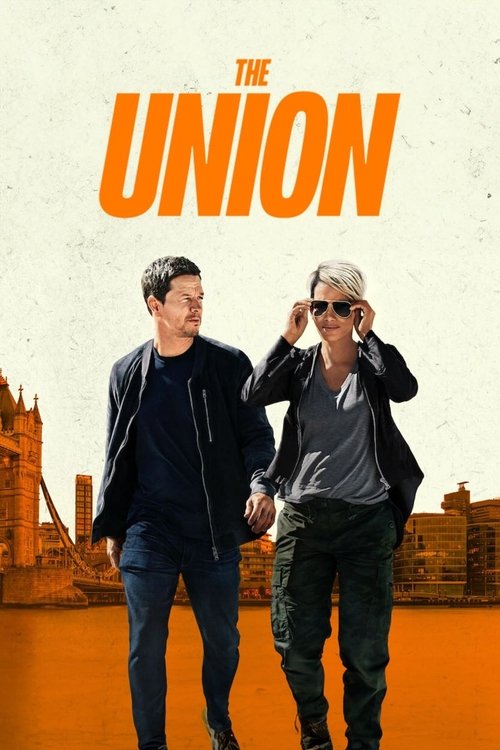
Julian Farino's action comedy stars Mark Wahlberg as Mike, a New Jersey construction worker whose high-school sweetheart Roxanne (Halle Berry) walks back into his local bar after 25 years. She now works for the Union, a secret intelligence outfit that recruits ordinary working people, and she drafts him into a mission in London to recover stolen files that name every Western agent. Most of the film is chases, gunfights and bickering between the two old flames.
Most of the score comes from the lead couple. Mike, who is white, and Roxanne, who is Black, are the central romance, and the film rekindles their relationship from the first bar scene to the last. They grew up in the same town and went to the same high school, so the match differs only in skin colour, which keeps it below the top score. Ethnicity is raised once, in a car argument: Roxanne says Mike's father objected to his Black girlfriend, mocks 'old-fashioned' as an excuse, and Mike agrees his father was wrong (1:03:57).
What keeps the rating low is that little else carries a message. Roxanne is not held up as faultless: she keeps things from Mikeshe hid her marriage from Mike, and the film sides with his small-town loyalty over her scorn for his 'small little life' (1:04:27). The Union's team is mixed, which adds a little, but its own pitch is about class, not identity: it hires 'blue collar, not blue blood'. Roxanne is the seasoned agent and Mike the trainee, but that is played as banter, not as a point about the sexes. The villains want moneyThe traitor, Roxanne's estranged husband, is driven by greed and resentment, not defined by any group, and there are no politics.
Score breakdown
Each category is scored 0 to 3: 0 absent or presence only, 1 brief, 2 recurring or plot-relevant, 3 central or dominant. Timestamps refer to the film's running time.
| Category | Score | What we saw |
|---|---|---|
| Content | ||
| A Ethnicity | 2 | The central romance is a mixed couple: Mike is white and Roxanne is Black. As the central romance it starts at 3. Both grew up in Paterson and went to the same high school, so they share a culture and differ only in skin colour: nothing is added for a cultural gap, and 1 is taken off, which gives 2. Roxanne herself is not drawn as flawless (she keeps things from Mikeshe hid her marriage from him, 1:03:32), and the one exchange about a racist father adds a brief message that does not raise the score.
|
| B Gender and feminism | 0 | No gender message. Roxanne is the seasoned agent and Mike her trainee, a common set-up in the genre, played as banter; Mike proves himself in the field and holds his own in the climax, and the jokes about men and women tease both sides (see the zeroed list). |
| C Sexuality and gender identity | 0 | No LGBTQ content. Mike's fling with his former seventh-grade teacher (0:05:24) is sex comedy, not advocacy. |
| D Power and systems | 0 | No institution is framed as oppressing a group. The CIA is mocked as incompetent (1:14:15) and the Union's pitch is about class (0:17:28), but these are spy-genre ribbing and working-class pride. |
| E Cultural and historical revision | 0 | An original screenplay. No established characters or history are recast. |
| F Religion portrayal | 0 | Islam is not portrayed. Iran is named as one of the bidders for the stolen files (0:41:30) and an Iranian cell appears lateras the final buyer (1:20:32), as generic foreign villains. |
| K Diverse cast | 1 | Beyond the lead couple, scored under A, the Union's field team includes two more non-white agents in supporting parts, Frank, who is Black, and Athena, who is Korean, alongside white colleagues. A modern Western intelligence outfit could plausibly be this mixed, but a team this varied goes a little beyond what it would most likely have. The mix is of ethnicity only; no gay or religious characters have real parts. The traitor, Nick, also Black, is a villain and does not add to it.
|
| Treatment | ||
| G Antagonist coding | 0 | No villain is coded by group, and the moral sides do not divide along ethnicity or sex. The antagonists are mercenaries, a fence and foreign buyers, all after moneyThe traitor is Roxanne's estranged husband Nick, a Black agent who sells out for money and out of resentment of Brennan's 'blue-collar bullshit' (1:08:45); the fence, Russian hit men and the Iranian buyers are all after money, and the Union's white chief, Brennan, is on the good side. |
| H Didacticism | 1 | There are no speeches with a social message, but one heated retort states the ethnicity point outright.
|
| I Message over story | 0 | A straightforward spy caper. The ethnicity exchange grows out of the couple's backstory and does not steer the plot, and the team's mix is never made a point. |
| J Left-leaning politics framed as good | 0 | No politics are argued. |
How the number is reached
- Categories A to K add up to 4 of 33, which gives 1.0 (4 ÷ 33 × 10, rounded to the nearest 0.5).
- No counterweight: None applies: the one exchange about ethnicity is not complicated or answered (Mike concedes), and the rest of the score comes from the couple and the team's mix, which the film shows without comment.
- Final rating 1.0, none or negligible.
Considered, scored 0
- Athena's quip that the North Korean team's hired men do not look Korean, and she would know because she is Korean (0:41:41): a joke, with nothing argued (A).
- Roxanne as a capable agent who is not faultless: she hid her marriage (1:03:32) and looked down on Mike's 'small little life' (1:04:27), so she is not counted as a flawless portrayal (A).
- Mike's reply to a gang member who loves Good Will Hunting, that it is nice to see yourself reflected on screen (0:33:17): a joke about class, not identity.
- Jokes about men and women: Roxanne asks whether Mike wants to negotiate with a woman carrying an assault rifle (0:29:30), a colleague teases Mike that he lost a fight to a woman, 'not that there's anything wrong with that' (0:39:07), and Mike tells a rivalNick he may have screwed up worst in the history of men screwing up (1:09:27). Banter, not a point about the sexes.
- The Union's pitch that it recruits street smarts over book smarts and 'blue collar, not blue blood' instead of Ivy Leaguers (0:17:13 to 0:17:39), and jokes about the 'Central Incompetence Agency' (1:14:15): class pride and genre ribbing.
- Russian hit men, North Korean and Iranian bidders as generic foreign villains, with no religion shown (0:38:49, 0:41:20).
Evidence and confidence
Confidence: Medium. A transcript of the audio, checked line by line against an English subtitle track (labelled as forced in the prepared material) that in fact covers the whole film. The short Farsi exchange in the Istria scene is subtitled. No gaps in the dialogue.
Category F definition: As in the rubric: Islam shown as a peaceful and tolerant religion, aligned with human rights, in a way that works as a corrective message.
Noted, not scored: The film's own values lean toward blue-collar pride and small-town loyalty: the Union prizes people who 'do the actual work' (0:17:24), Mike defends his unchanged life and the friends in Paterson he can count on (1:04:37), and Roxanne comes round to itRoxanne ends up calling herself a homebody and turns up at a Paterson wedding (1:34:36, 1:36:30).
Rubric version 3. Reviewed 18 November 2026.