Woke rating
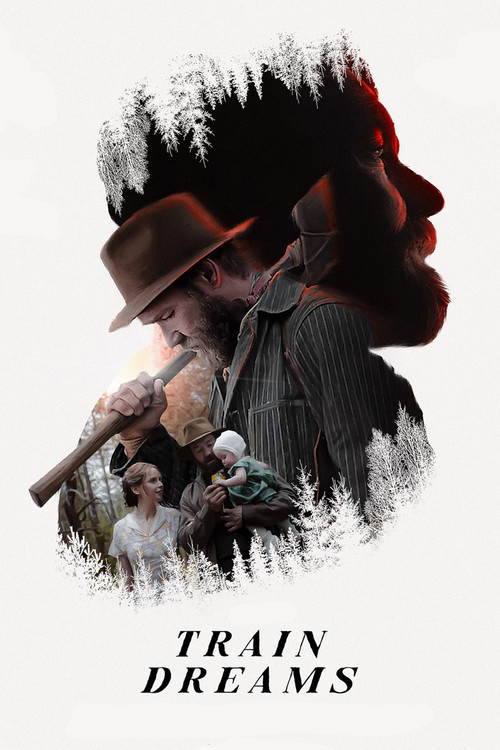
Train Dreams
None or negligible
A quiet, elegiac frontier drama about one logger's life in the early 20th-century Northwest, with a few brief scenes of period ethnic violence and a gentle reverence for the old forest, but almost nothing argued.
Clint Bentley's adaptation of Denis Johnson's novella follows Robert Grainier (Joel Edgerton), an orphan raised in northern Idaho who marries Gladys (Felicity Jones) and spends long seasons away from her and their baby daughter, felling timber and building railroad bridges. Told largely through narration, the film covers his whole life, from the logging camps of the First World War era to the space age, through the men he works beside and the changes he sees.
The messaging sits in two places. Early on, the narration recalls the expulsion of Chinese families from the town of Grainier's childhood, a Chinese co-worker is seized and dragged off by a gang of railroad men in front of him, and a stranger walks into a logging camp to shoot a man he says killed his brother over the colour of his skin. Later, an old explosives man's campfire speech and a fire lookout's talk about the forest voice a reverence for the old-growth woods the crews are cutting down.
The messaging sits in two places. Early on, the narration recalls the expulsion of Chinese families from the town of Grainier's childhood, a Chinese co-worker is seized and dragged off by a gang of railroad men in front of him, and a stranger walks into a logging camp to shoot a man he says killed his brother over the colour of his skin. Later, Arn Peeples's campfire speech, shortly before a dead branch kills him, and the widowed fire lookout Claire's talk about the forest, after a wildfire has taken Gladys and Kate, voice a reverence for the old-growth woods the crews are cutting down.
What keeps the score at the bottom is that none of this is argued in modern terms. The ethnic violence is shown as part of a harsh era, takes up a few minutes, and the dialogue never returns to it. The forest speeches come from people whose lives are bound up with the timber trade, one logger answers back, and the film treats the work and the men who did it with respect. Gladys and Claire are capable women, but the film makes no point about their sex.
Score breakdown
Each category is scored 0 to 3: 0 absent or presence only, 1 brief, 2 recurring or plot-relevant, 3 central or dominant. Timestamps refer to the film's running time.
| Category | Score | What we saw |
|---|---|---|
| Content | ||
| A Ethnicity | 1 | Ethnic violence of the period appears in three brief early scenes, shown as wrong but never lectured about: the Chinese worker seized by a railroad gang and the expelled Chinese families are blameless victims of white men, and the narration calls the casual violence baffling. Scored 1: each scene is brief, the anti-Chinese expulsions of the Northwest are documented history of the time and place, the plot does not turn on them, and the dialogue never returns to them. No non-white character has a large part, and no mixed couple appears.
|
| B Gender and feminism | 0 | No gender message. Gladys introduces herself first, which the narration says women may well have done every day (0:03:50), and the fire lookout Claire reads out a reference praising her as free of the timidity of her sex (1:18:52), but both are character colour and nobody comments on women's place. |
| C Sexuality and gender identity | 0 | No LGBTQ characters or themes. |
| D Power and systems | 0 | The logging company is hard-driving: a boss says the war's need for spruce allows no day off after a fatal accident (0:29:49), and a foreman threatens to dock the crew's pay (1:00:34). This is the texture of the work, not a critique framed as the oppression of a group. |
| E Cultural and historical revision | 0 | An adaptation of Denis Johnson's novella. Nothing in the material suggests characters or history were recast to carry a message. |
| F Religion portrayal | 0 | Islam does not feature. Christianity is shown sincerely (the church where Grainier meets Gladys, 0:04:22; a Bible-quoting faller, 0:21:06; a prayer at a burialArn's burial, 0:43:15), and Claire's remark that the world's flood myths are one story told from different slants (1:10:50) comes with an immediate apology. |
| K Diverse cast | 0 | The cast is mostly white: Grainier, Gladys, the loggers and Claire. A Chinese bridge worker and Ignatius Jack, a Native man who helps Grainier rebuild his cabin (0:58:39), have small parts, the people an Idaho logging and railroad country of the 1910s would really have, so nothing adds to a mixed cast. No character's sexuality is at issue, and the faith shown is plain frontier Christianity. |
| Treatment | ||
| G Antagonist coding | 0 | There are no villains defined by a group. The railroad gang that seizes the Chinese worker are white men on screen for seconds, and the logger shot in camp is accused of a killing over skin colour, but no minority character stands out on the good side against them: the victims are nameless and gone within the scene, and the hero is a white man. The film's other hardships are nature, accident and time. |
| H Didacticism | 0 | No speech states a message under A to F. Arn's and Claire's short speeches of reverence for the old forest are counted under J. |
| I Message over story | 0 | The story follows the novella's episodic life of one man, and none of its turns bends toward a message. |
| J Left-leaning politics framed as good | 1 | A conservationist streak runs through the narration and two short speeches, Arn's and Claire's, and the logger who expects the timber never to run out is answered as youthful naivety. No politics or policy is argued, one of the speeches is disputed on the spot, and the men who do the cutting are treated with respect.
|
How the number is reached
- Categories A to K add up to 2 of 33, which gives 0.5 (2 ÷ 33 × 10, rounded to the nearest 0.5).
- Counterweight −0.5: The forest theme is complicated by who carries it: Arn and Grainier are loggers themselves, the itinerant workers are remembered with affection (0:19:57), the dissenting logger gets his say (0:38:48), and Claire's Forest Service job is to manage timber cuts and prevent fires, not to end logging (1:11:32).
- Final rating 0.0, none or negligible.
Considered, scored 0
- The narration's note that Grainier took comfort in how easily men from places like Shanghai and Chattanooga fell in together on the job (0:07:02).
- Ignatius Jack, a Native man who helps Grainier raise his cabin (0:58:39), and the Chinese bridge worker (0:07:38), small parts that the setting accounts for (K).
- Gladys introducing herself first (0:03:50) and Claire's reference praising her as free of the timidity of her sex (1:18:52).
- The company's refusal of a day off after a fatal accident (0:29:49) and a foreman's threats to dock pay (1:00:34), part of the hardship of the work.
- Claire's remark that the world's flood myths are one story with different slants (1:10:50), for which she apologises at once.
- Army tents said to have served the Union infantry and then the Indian campaigns (0:27:09), a passing historical detail.
Evidence and confidence
Confidence: Medium. Full English subtitles from the embedded track (narration and dialogue). The film has little dialogue, so some stretches (for example 0:45:16 to 0:47:43, the fire) were judged from the picture alone.
Category F definition: As in the rubric: Islam shown as a peaceful and tolerant religion, aligned with human rights, in a way that works as a corrective message.
Rubric version 3. Reviewed 18 November 2026.