Woke rating
Wasp Network
None or negligible
A Cold War spy drama set among Cuban exiles in 1990s Miami. Its sympathies lie with Havana against the anti-Castro groups, but it shows the hardship of life in Cuba plainly and carries no identity politics.
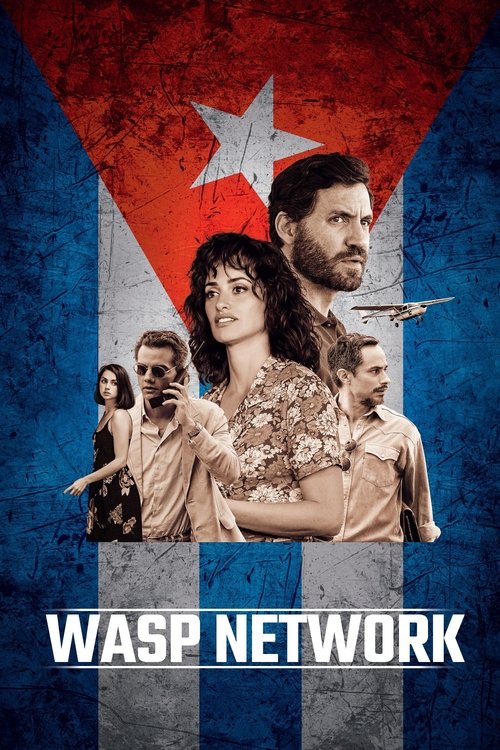
Olivier Assayas's drama is based on real people and events. In 1990 René González (Édgar Ramírez), a Cuban pilot, flies a stolen plane to Florida and leaves his wife Olga (Penélope Cruz) and their daughter in Havana. In Miami he flies for Brothers to the Rescue, a group that searches the Florida Straits for rafters. Another pilot, Juan Pablo Roque (Wagner Moura), swims to the US base at Guantánamo, joins the same group and marries Ana Margarita (Ana de Armas). Back in Cuba, Olga lives as a traitor's wife amid blackouts and shortages.
The messaging is Cold War politics, not identity. From the start, the exile groups are shown as more than humanitarian. Brothers to the Rescue calls itself militant, another group is a front for cocaine smugglers, a third raids the Cuban coast, and Basulto, whose flights the Cuban American National Foundation (CANF) pays for, looks forward to getting the refineries and casinos back once Castro falls. In the second half, a Cuban spy network in Miami moves to the centre, and the film's sympathies settle on Havana's side.
The messaging is Cold War politics, not identity. From the start, the exile groups are shown as more than humanitarian. Brothers to the Rescue calls itself militant, another group is a front for cocaine smugglers, a third raids the Cuban coast, and Basulto, whose flights the Cuban American National Foundation (CANF) pays for, looks forward to getting the refineries and casinos back once Castro falls. Midway, the film reveals that René and Roque are Cuban agents in the Wasp Network, run by Gerardo Hernández (Gael García Bernal) to infiltrate exile groups that plan attacks. A handler tells Olga her husband is a hero of the Revolution. Roque slips back to Havana just before Cuban MiGs shoot down two of the group's planes, and a CANF-funded bomber kills an Italian tourist at a Havana hotel. After the network passes a plot against Castro to the FBI, the FBI arrests the agents. René refuses to testify against his comrades, Olga has to leave their baby with family, and an archive clip gives Castro the last political word: the world's biggest spy is accusing the most spied-upon country.
What keeps the score low is that none of this is identity politics, and the film does not whitewash the regime. Cuba is a place of blackouts, hunger and officials who stall a woman's exit papers. Brothers to the Rescue really does save rafters, and the agents' families pay for their choicesthe Cuban air force cheers as it shoots down civilian planes, Roque takes money from both sides, and Olga and Irma say plainly what the mission cost them. Ethnicity, sex and sexuality carry no message.
Score breakdown
Each category is scored 0 to 3: 0 absent or presence only, 1 brief, 2 recurring or plot-relevant, 3 central or dominant. Timestamps refer to the film's running time.
| Category | Score | What we saw |
|---|---|---|
| Content | ||
| A Ethnicity | 0 | Ethnicity never comes up. The cast is a mix of Cuban and Latin American faces, including a Black official who handles Olga's exit papers (0:52:30), shown without comment. None of the couples is mixed-ethnicity. |
| B Gender and feminism | 0 | Olga is a strong, stubborn wife who calls herself a fighter (0:15:53), and the wives' grievances are personal, not points about women. Nothing is framed as a statement about gender. |
| C Sexuality and gender identity | 0 | No LGBTQ characters or themes. |
| D Power and systems | 0 | No identity angle. The film's picture of the United States as the base of an anti-Castro campaign it tolerates, with exile groups launching raids and bombings from Florida and the FBI buying informers instead of stopping them, then arresting the Cubans who exposed the plots, is Cold War politics, not oppression of a group, and is counted under J. |
| E Cultural and historical revision | 0 | Based on real people and events, named on screen, with a closing card on René's prison term (2:01:30). Nothing in the material shows that characters or history were recast. The choice of which events to show favours the Cuban side, which is scored under J. |
| F Religion portrayal | 0 | Religion appears only as a Catholic wedding in Miami (0:44:24), and Islam does not feature. |
| K Diverse cast | 0 | A true story set among Cubans in Havana and Miami, and the cast is that community, Cuban and Latin American with a few Black Cubans such as the official who handles Olga's exit papers (0:52:30): the mix the real time and place had. There are no gay characters, and the only faith shown is a Catholic wedding. |
| Treatment | ||
| G Antagonist coding | 0 | No villain is defined by a demographic group. Every exile group the film shows is tainted, from a self-declared militant flying group and a cocaine front to a foundation that funds hotel bombings, but their leaders are defined by anti-communism and money, an ideological and class coding counted under J. Heroes and villains alike are Cuban and Cuban-American men, so the moral sides do not divide along ethnicity or sex. |
| H Didacticism | 0 | Several scenes state the Cuban side's case directly: an agent's explanation to his wife, a handler's speech to Olga and Castro's own televised defence. That is Cold War politics, not a message under A to F, and is counted under J. |
| I Message over story | 0 | The story follows the case as the film tells it, and its mid-film turnits mid-film reveal is a thriller device, not a plot bent to a point. The slant lies in the framing, which is scored under J. |
| J Left-leaning politics framed as good | 3 | The film sides with Castro's Cuba against its right-wing exile enemies and the United States that tolerates them. The exile groups are drawn as militants, smugglers and bombers driven by anti-communism and money, the FBI buys informers instead of stopping them, then arrests the Cubans who exposed the plots, and several scenes state Havana's case directly: the agents are framed as patriots and heroes of the Revolution, and Castro has the last political word. Scored 3: it is the film's political frame from the midpoint on. The film still does not hide what life under the regime costs, from blackouts and hunger to a bureaucracy that will not let a woman leave, and gives Basulto a real motive and real rescues; that is reflected in the counterweight.
|
How the number is reached
- Categories A to K add up to 3 of 33, which gives 1.0 (3 ÷ 33 × 10, rounded to the nearest 0.5).
- Counterweight −0.5: The film complicates its own sympathies. It shows Cuba's blackouts, hunger and stifling bureaucracy (0:15:27, 0:36:31, 0:53:37), and it gives Brothers to the Rescue a real humanitarian motive in a drowned 15-year-old rafter and the rafters it saves (0:09:04, 0:12:26). It also shows what its heroes' choices cost.Cuban MiG pilots cheer as they shoot down civilian planes (1:15:37, 1:16:37), Roque takes FBI money while working for Havana (0:34:41), and Olga and Irma say what the mission cost the family (1:23:51, 1:51:36).
- Final rating 0.5, none or negligible.
Considered, scored 0
- Olga calling herself a fighter (0:15:53) and training in radio work to help her husband (1:25:00), a character trait rather than a statement about women.
- A Black official handling Olga's exit papers (0:52:30) and the mixed Cuban cast, shown without comment: the mix of the real setting (K).
- A Catholic church wedding in Miami (0:44:24), shown without comment.
Evidence and confidence
Confidence: Medium. Full English subtitles for the Spanish dialogue from the embedded track. The track seems to leave English-spoken dialogue untranslated. Several scenes have no lines, so they were judged from the picture alone: the US base (about 0:17 to 0:20), a White House statement and a TV interview (1:17 to 1:20), a meeting of officials (1:41 to 1:43) and a raid and a hearingthe FBI raid and the US court hearing (1:47 to 1:50).
Category F definition: As in the rubric: Islam shown as a peaceful and tolerant religion, aligned with human rights, in a way that works as a corrective message.
Noted, not scored: Several points cut against the regime: Olga and René describe blackouts, hunger and no medicine in Cuba (0:15:27, 0:36:31); Brothers to the Rescue is founded after a 15-year-old dies fleeing on a raft (0:09:04); Cuban officials stall Olga's exit with new documents (0:52:01); and Cuban pilots shout 'Our country or death!' as they shoot down the unarmed Cessnas (1:16:37).
Rubric version 3. Reviewed 18 November 2026.