Woke rating
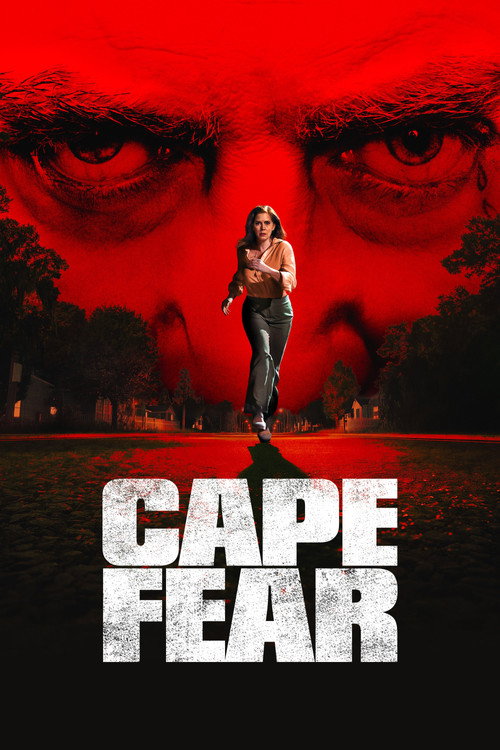
Cape Fear
None or negligible
A Savannah-set remake of the stalker thriller, built around a nonprofit that frees the wrongly convicted, whose recurring talk of a broken justice system is undercut by the show's own suspicion of that cause.
This Apple TV+ remake of Cape Fear moves the story to Savannah. Anna Bowden (Amy Adams) is the senior lawyer at the SJLP, a nonprofit that gets innocent prisoners freed, and her husband Tom (Patrick Wilson) is a former prosecutor. Seventeen years ago a young, pregnant Anna defended Max Cady (Javier Bardem), and Tom was the prosecutor who got Cady to plead guilty to murdering his pregnant wife; the two lawyers married soon after. When Cady's mistress leaves a suicide note confessing to the killing, he is quietly released, turns up at the SJLP's gala and starts drawing close to the family while their teenage son Zack drifts away. The first episode ends with Cady's veiled threat made literalThe first episode ends with Zack coming home drugged and missing a toe, echoing Cady's gala speech about fingers and toes.
The messaging sits in the setting. Anna and her partner Noa pitch the innocence cause at the gala, and Cady's own speech there calls the courts a 'criminal injustice system' that pressured him into a plea and broke its deal with a life sentence. The second episode adds rough police, a client weeks from execution and Cady's talk of the falsely convicted losing faith in every system. Ethnicity comes up once, in a cynical line about rich white donors, and a teenager's jab that Tom used to jail poor people is the only class point.
What keeps the score low is that the show is wary of the cause it depicts. The nonprofit treats exonerees as fundraising props, its interns' scripted sympathy is played for awkwardness, and the person most fluent in reform language is the man the family fears. A freed client's story also goes badly wrong, and the Bowdens have their own secret about the case. Nobody is a villain because of their group. The nonprofit's Black staff and clients are the people a Savannah innocence charity would have, and none of them is idealised. Only two of the owner's six episodes could be reviewed, so later episodes could differ.
What keeps the score low is that the show is wary of the cause it depicts. The nonprofit treats exonerees as fundraising props, its interns' scripted sympathy is played for awkwardness, and the person most fluent in reform language is the man the family fears. Byron French, the client freed by DNA, comes home drunk or high and is shot dead by the mother who fought for his release, and Anna and Tom turn out to share a secret about what they did in Cady's case. Nobody is a villain because of their group. The nonprofit's Black staff and clients are the people a Savannah innocence charity would have, and none of them is idealised. Only two of the owner's six episodes could be reviewed, so later episodes could differ.
Score breakdown
Each category is scored 0 to 3: 0 absent or presence only, 1 brief, 2 recurring or plot-relevant, 3 central or dominant. Timestamps refer to the film's running time.
| Category | Score | What we saw |
|---|---|---|
| Content | ||
| A Ethnicity | 1 | Ethnicity comes up once, as cynicism about fundraising rather than a theme. The Black characters with a real part are not held up as flawless: Noa, who runs the nonprofit, treats exonerees as fundraising props, and Byron, the freed client, is a rough-edged ex-convict who comes home drunk or high and is shot dead. No mixed couple appears; the central couple, Anna and Tom, are white.
|
| B Gender and feminism | 0 | Anna is the senior lawyer and Natalie a star athlete, but nothing is framed as a point about gender. A podcaster's sneer at 'little miss pregnant lawyer' is shown as tabloid nastiness, and Zack's sharing of a girlfriend's intimate photos is told as a family trouble, not a message. |
| C Sexuality and gender identity | 0 | No LGBTQ+ content in the two episodes reviewed. |
| D Power and systems | 0 | The wrongful-conviction cause is the setting and recurs in both episodes, but as a critique of the justice system as a whole, not of one group's oppression, so it is scored under J. Ethnicity comes up only in the fundraising line scored under A. |
| E Cultural and historical revision | 1 | A loose remake of the 1962 and 1991 films. The source is reworked around the wrongful-conviction cause: Cady is freed on new evidence and may be innocent, and the defence lawyer he has reason to blame is now the wife, Anna, with her husband as the prosecutor. Cady's new half-Spanish background is listed under zeroed.
|
| F Religion portrayal | 0 | Islam does not appear. |
| K Diverse cast | 0 | The family at the centre is white, and Cady is a Spanish-raised European. The Black characters with real parts, Noa, the investigator Ray Rawlins and the exoneree Byron, are what an innocence nonprofit in Savannah, a largely Black city, would really have, so the mix is the setting. No gay characters and no religion feature in the two episodes reviewed. |
| Treatment | ||
| G Antagonist coding | 0 | Cady is the menace, a white man with personal motives: 17 years inside for a killing he says he did not commit, and the wife and unborn son he lost. The family he targets is led by a husband and wife alike, as in the source films, and the women on the good side are not set against the men: Noa treats exonerees as props and Anna shares Tom's secret about the case. Anna's father, who sneers at liberals, is a brief family trouble, not a villain. The sides do not divide along ethnicity or sex. |
| H Didacticism | 0 | No speech states an identity message. The innocence cause is stated directly in a handful of speeches, Noa's and Anna's gala pitches (S01E01 0:32:36, 0:34:07) and Cady's newspaper interview (S01E02 0:42:54), but they are scored under J, and the show frames them as performance. |
| I Message over story | 0 | The story leads. The innocence-nonprofit setting drives the thriller, not the other way round. |
| J Left-leaning politics framed as good | 2 | Wrongful conviction is the show's cause and recurs in both episodes: a coerced plea, a life sentence beyond the agreed deal, a client facing execution and talk of a 'criminal injustice system', with a jab that Tom used to jail poor people. Innocence work is the family's moral credential and saving a death-row client is framed as worth the fight, while the one sneer at 'country club liberals' comes from Anna's estranged father. Scored 2, not 3: the show is cynical about the nonprofit, and much of the reform talk comes from Cady, whom it treats with suspicion.
|
How the number is reached
- Categories A to K add up to 4 of 33, which gives 1.0 (4 ÷ 33 × 10, rounded to the nearest 0.5).
- Counterweight −0.5: the show is openly wary of the cause it depicts: the nonprofit treats exonerees as fundraising props in S01E01 (0:11:10, 0:30:31) and S01E02 (0:42:30), the interns' scripted sympathy is played for awkwardness in S01E01 (0:16:51), the most fluent voice for reform is the man stalking the family, and a freed client's story goes badly wrong.the nonprofit treats exonerees as fundraising props in S01E01 (0:11:10, 0:19:27, 0:30:31) and S01E02 (0:42:30); the interns' talk of 'lived experience' and apology for 'the system' are played for awkwardness in S01E01 (0:16:51); Cady, the man stalking the family, is the most fluent voice for reform; Byron French, freed by DNA, is shot dead by his mother after coming home drunk or high in S01E02 (0:22:19); and Anna and Tom share a secret about Cady's case in S01E02 (0:47:32).
- Final rating 0.5, none or negligible.
Considered, scored 0
- An ethnically mixed legal-aid team and gala crowd in Savannah (S01E01 0:16:38, 0:31:30, 0:40:30), the mix the setting accounts for (K).
- Cady's new background in S01E02 (0:43:45): son of an American soldier and a Basque mother, raised in Spain until 13 and rejected by his father as a 'mongrel' (0:45:06). Played by Spanish actor Javier Bardem, it is a European heritage that follows the casting and serves as personal motive, not a point about ethnicity (E).
- Noa and Byron, likeable but flawed: she treats exonerees as props (S01E01 0:11:10) and he is a rough-edged ex-convict who reaches for the drink at the gala (0:17:07) and comes home drunk or high (S01E02 0:22:19) (A).
- Ruben Ramirez, a Spanish-speaking death-row client, as such; his case is counted under J.
- Brandon's admiration for Megan Rapinoe as a gift-shopping detail in S01E02 (0:29:03).
- Zack's leaked intimate photos of a girlfriend in S01E02 (0:13:28), told as the reason for his troubles.
Evidence and confidence
Confidence: Medium. Full English subtitles from the embedded track (plus the forced track for Cady's Spanish in S01E02). Only 2 of the owner's 6 episodes (S01E01, S01E02, S01E04, S01E06, S01E07, S01E09) were usable: S01E04, S01E06 and S01E09 were damaged and not prepared, and S01E07 yielded one subtitle line and an audio transcript with no dialogue, so it was not used. The rating reflects the first two episodes only; later ones could differ.
Category F definition: As in the rubric: Islam shown as a peaceful and tolerant religion, aligned with human rights, in a way that works as a corrective message.
Episodes reviewed: S01E01, S01E02.
Rubric version 3. Reviewed 18 November 2026.