Woke rating
Crystal Lake
Mild
A 1970s Friday the 13th prequel whose central mixed-ethnicity romance, small-town racism and corporate-conspiracy plot give it a mild progressive tilt, though the messaging stays in character and the series mocks its hippies as readily as its bigots.
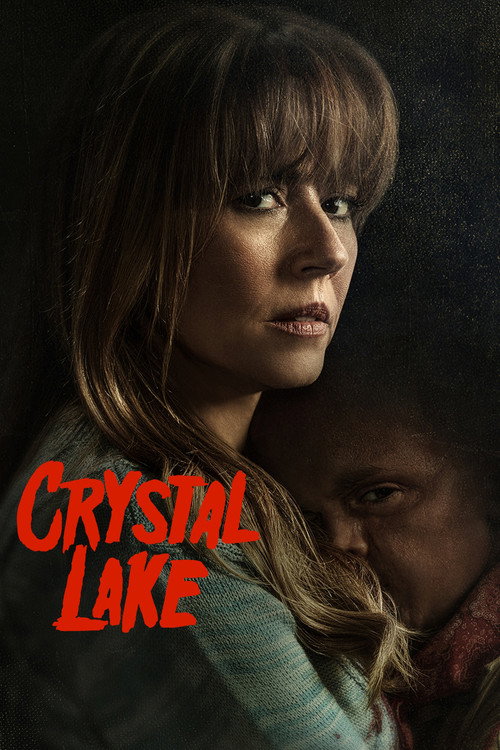
Crystal Lake is Peacock's eight-episode prequel to Friday the 13th, set in New Jersey in 1972. Pamela Voorhees (Linda Cardellini), the camp cook, cannot let go of her son Jason, a sickly, disfigured boy who drowned at Camp Crystal Lake the summer before. Two men posing as state police come asking about her past, human remains turn up in the woods, and Levon Brooks, the town's police chief, starts digging, helped by his sister Briana, a reporter in Newark. Meanwhile the camp reopens, a van of hippies arrives to help fix it up, and Grace, a bullied 13-year-old who was Jason's only friend, falls in with them.
Ethnicity is the most visible thread. Pam's romance with Levon, a Black chief who left the Newark police under a cloud, runs through the season, and the town's reaction to him is played as 1970s racism: Dorf's father calls him a slur and says the town was quiet until he came, and the state police push him off his own case. Briana complains that as one of two Black writers on her paper she gets the throwaway stories. Gender comes through the men around the women: a self-help guru who bullies his seminar and then pressures Pam into bed, a pastor who makes a teenage girl confess her sex life in detail, and a hippie who names the sexual double standard outright. The investigation turns on Bellflower, a chemical giant that sells to the army, pays off whistleblowers and sends armed men after a reporter, and the back half of the season shows what it did to the people it experimented on.
Ethnicity is the most visible thread. Pam's romance with Levon, a Black chief who left the Newark police under a cloud, runs through the season, and the town's reaction to him is played as 1970s racism: Dorf's father calls him a slur and says the town was quiet until he came, and the state police push him off his own case. Briana complains that as one of two Black writers on her paper she gets the throwaway stories. Gender comes through the men around the women: a self-help guru who bullies his seminar and then pressures Pam into bed, a pastor who makes a teenage girl confess her sex life in detail, and a hippie who names the sexual double standard outright. The investigation turns on Bellflower, and the episode-seven flashback shows what it did: Pam's husband Elias, a rising executive, steers her into an experimental pregnancy treatment, the company doctors sedate her and call her hysterical, and he threatens to take Jason if she resists. Jason's condition is the result of the experiment, which Elias unveils to investors as a way to survive nuclear war.
What keeps the score mild is that the messaging lives inside character and period, and the series refuses to make anyone clean. The bigots and predators are mostly white men and are drawn crudely, but several white men are decent, Levon has a past he would rather not discussadmits he took a share of looted drug money in Newark; the hippies who preach free love and quote Marx also give a 13-year-old drink and acid; the guru is exposed as a fraud; and the women are no more innocent than the men: Grace's mother beats her, and Pam herself is the killer. Dorf, the bigot's son, ends up on Levon's sideends up saving Levon's life. Hardly anyone lectures; the most pointed lines are one-offs in passing conversation.
Score breakdown
Each category is scored 0 to 3: 0 absent or presence only, 1 brief, 2 recurring or plot-relevant, 3 central or dominant. Timestamps refer to the film's running time.
| Category | Score | What we saw |
|---|---|---|
| Content | ||
| A Ethnicity | 2 | Pam's romance with Levon, the town's Black police chief, is the series' central romance (prominence 3). Both are Americans of the same region and era who differ in skin colour only, so 1 comes off (2). Period racism recurs on top of it: slurs from Dorf's father, the state police's contempt, Levon's claim that he was the scapegoat for a dirty unit, and Briana's newsroom complaint. It is shown far more than argued, it is true to a white New Jersey town in 1972, and Levon is not a blameless victim: he later admits taking a share of looted drug money, so it does not lift the score above the couple's.
|
| B Gender and feminism | 2 | Women are recurrently at the mercy of men: a predatory self-help guru, a prurient pastor, a driver who paws at a hitchhiker, and later the men who run Pam's life and, in the flashback, a husband and company doctors who sedate wives and experiment on their pregnancies. A hippie names the double standard outright. Scored 2, not 3: it is period setting rather than a thesis, and the women are no saints (Grace's abusive mother, cruel Claudette, Harmony, and Pam herself).
|
| C Sexuality and gender identity | 1 | No LGBTQ storyline. Sexual mores are period colour: a teenager's pastor teaches purity and makes her confess her sex life in detail, a mild dig at purity culture, and a male hippie's offer to join a threesome is played for comedy and answered with a slur from the jock. The slasher plot cuts the other way (see below).
|
| D Power and systems | 1 | Police are shown treating Levon by his ethnicity: by his account the Newark department found it easier to blame the Black officer than clean house, and the state police push him off his own case with an ethnic insult.. Bellflower's experiments on more than 100 pregnant women, whose doubts its doctors treat as delusions, add a gendered edge. Scored 1: Levon has a past he would rather not discussLevon later admits he took a share of the looted drug money, so his account is not the whole truth, and the rest of the Bellflower plot (tainted rations sold to the army, a silenced whistleblower, armed men sent after a reporter) is a genre conspiracy run by individual villains, not oppression of an identity group, so it is scored under J.
|
| E Cultural and historical revision | 0 | A prequel to Friday the 13th (1980). Pamela, Jason, Crazy Ralph and Officer Dorf keep their original sex and ethnicity; Levon and Briana Brooks are new characters. The invented backstory for Pamela and Jasonof corporate experiments behind Jason's condition is scored under D, not here. |
| F Religion portrayal | 0 | No Muslim characters or references. |
| K Diverse cast | 0 | The main cast is white apart from Levon and his sister Briana, the one Black family in the story, and their standing as Black outsiders in a white 1972 lake town is what the racism thread turns on. Religion appears only as a local pastor and the town's churchgoing, and no main character is gay, so there is no mix beyond what the story needs. |
| Treatment | ||
| G Antagonist coding | 2 | The characters with bad values are recurrently white men: the bigoted Hamish and the state police, a bullying self-help guru, a driver who paws a hitchhiker, and the corporate men behind the conspiracyElias and Bellflower's doctors, while the Black chief, his sister and the women these men prey on stand on the good side. Scored 2, a recurring pattern, not 3: several white men are on the good side (Ralph, John Christy, eventually Dorf), Levon has a past of his own, and the central figure is far from innocentPam is herself the killer.
|
| H Didacticism | 1 | Only one-liners state a message, each in character and quickly passed over. No one gives a speech on them, and the longer speeches (the guru's, a villain'sElias's keynote) are not the show's voice.
|
| I Message over story | 0 | The horror mystery leads throughout; the social threads are woven into character and period colour and do not bend the plot, and nothing is bent to serve the cast. |
| J Left-leaning politics framed as good | 1 | Conservative-coded townsfolk are mostly bigots or blowhards, the purity-preaching pastor is prurient, and the hidden antagonist is a chemical and defence conglomerate that sold the army tainted rations and paid to silence a whistleblower. Scored 1: the left-coded hippies get the same treatment, with a Marx quote covering freeloading and a free-love ethic shown as careless and pushy, and the corporate villain is genre conspiracy more than politics.
|
How the number is reached
- Categories A to K add up to 10 of 33, which gives 3.0 (10 ÷ 33 × 10, rounded to the nearest 0.5).
- Counterweight −0.5: the series complicates its own sympathies: the Black chief has a past he is not proud of, the free-love hippies give a 13-year-old drink and drugs, the self-help guru is exposed as a fraud, the women are as flawed as the men, and the bigot's son comes good.Levon admits he took a share of looted drug money in Newark in S01E08 (0:13:00), so his scapegoat story is not the whole truth; the free-love hippies give 13-year-old Grace drink in S01E04 (0:44:32) and acid in S01E05 (0:35:28); the guru is exposed as a fraud in S01E02 (0:47:29); Grace's mother beats her in S01E03 (0:37:43), and Pam herself is the killer; and Dorf, the bigot's son, saves Levon and Pam in S01E08 (0:24:02, 0:26:31).
- Final rating 2.5, mild.
Considered, scored 0
- Levon and Briana Brooks, the one Black family in a white 1972 lake town, a mix the racism thread turns on (K); Levon himself is likeable but not blameless (A).
- Briana Brooks, a Black woman reporter, as the investigator who cracks the Bellflower story, as such.
- Jason's disfigurement and the bullying he suffers in S01E01 (0:08:01), shown as cruelty rather than as a disability message.
- Pam's and Valerie's single motherhood, shown without comment.
- A hippie's 'opiate of the masses' line about religion in S01E04 (0:21:35), a running gag at his expense.
Evidence and confidence
Confidence: Medium. Full English subtitles (embedded track) for every episode. All 8 of the 8 episodes the owner has were reviewed, which is the whole of season 1. The HDR picture is dark and several night scenes are hard to read, and the subtitles carry little during the wordless kill scenes.
Category F definition: As in the rubric: Islam shown as a peaceful and tolerant religion, aligned with human rights, in a way that works as a corrective message.
Noted, not scored: Levon, the hero, calls himself old-fashioned about sex and says he thought Pam was too, in S01E05 (0:09:52). The slasher rule plays straight: a girl who has sworn off sex at her pastor's urging goes back to her boyfriend, and it ends badlyClaudette's pastor warns that sins of the flesh bring bad things in S01E04 (0:29:18), and she and Barry are killed moments after making out in the boathouse in S01E05 (0:43:37). Ralph, a veteran of two wars, refuses a search without a warrant as the right he fought for, in S01E04 (0:25:38); the series takes his side when he is wrongly arrested. Drugs are shown as dangerous: the acid at the camp ends in tragedyGrace kills Barry and Claudette while tripping, in S01E05 (0:44:32).
Episodes reviewed: S01E01, S01E02, S01E03, S01E04, S01E05, S01E06, S01E07, S01E08.
Rubric version 3. Reviewed 17 November 2026.