Woke rating
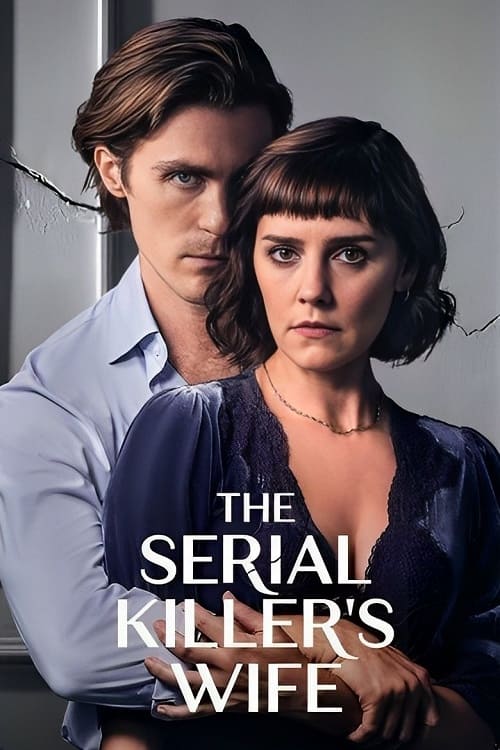
The Serial Killer's Wife
Mild
A twisty domestic thriller whose focus on men's control of and violence toward women gives it a mild slant, though it has a compromised heroine, almost no speeches and no politics.
A four-part Paramount+ thriller set in a well-off village on the Kent coast. At his 40th birthday party, the local GP Tom Fairchild is arrested for the murder of Katy Asquith, a former receptionist at his surgery who was suing him. His wife Beth gives him an alibi, then starts to find out what he has kept from her, from affairs to violent porn, while DI Edgeworth keeps digging into him against her boss's wishes.
What messaging there is runs through the story's subject: men's control over women and the violent sex some of them want. Tom reminds Beth who pays for her life, the family lawyer tells her to go home and get the dinner on, her mother says she fled Beth's father because his friends were the police, and village gossip blames the murdered woman for her boyfriends. A supporting mixed couple, Ollie and Libby, counts lightly, and the cast is more mixed than a well-off Kent village would suggest; snobbery between the village set and outsiders recurs. The last episode states the theme outright in one confrontation.
What messaging there is runs through the story's subject: men's control over women and the violent sex some of them want. Tom reminds Beth who pays for her life, the family lawyer tells her to go home and get the dinner on, her mother says she fled Beth's father because his friends were the police, and village gossip blames the murdered woman for her boyfriends. A supporting mixed couple, Ollie and Libby, counts lightly, and the cast is more mixed than a well-off Kent village would suggest; snobbery between the village set and outsiders recurs. The killer turns out to be Adam, Tom's oldest friend, who framed him out of lifelong envy and contempt for 'easy' women. Beth, now married to Adam, kills him, then destroys the evidence that would clear Tom, tells him he assaults women and corrodes everything around him, and decides her two daughters are better off without either man as a father.
What keeps the score in the mild band is that the series argues almost nothing. Ethnicity and politics never come up, no one is held up as flawless (the Black detective leading the case is rebuked for going in all guns blazing), speeches are rare, and the theme is carried by a thriller plot. The heroine is no saint: she lies to the police and keeps secrets of her ownshe keeps up a false alibi, steers Libby into giving up Ollie, with fatal results, and ends by leaving an innocent man in prison. The village women gossip and slut-shame as freely as the men behave badly, and the sex-club storyline is treated as plot rather than sermonthe show lets Tom's point stand that rough sex does not make him a murderer.
Score breakdown
Each category is scored 0 to 3: 0 absent or presence only, 1 brief, 2 recurring or plot-relevant, 3 central or dominant. Timestamps refer to the film's running time.
| Category | Score | What we saw |
|---|---|---|
| Content | ||
| A Ethnicity | 1 | Ollie, who appears to be South Asian, and his white fiancée Libby, who works at Beth's cafe, are a recurring supporting couple, which starts at 2. Both are local and nothing sets their backgrounds apart, so they share a culture and differ only in skin colour, and one point comes off, giving 1. Ethnicity itself is never mentioned, and Ollie is not held up as flawless: he is a small-time drug dealerhe is dealing drugs again when he becomes a suspect.
|
| B Gender and feminism | 2 | Men's control of women and violence toward them is the series' subject, through Tom's affairs, choking and threats, the lawyer's condescension, Beth's mother's past and the gossip about the victim, and the killer's contempt for women. Scored 2, not 3: it is mostly shown through the thriller rather than argued, and the women are drawn as flawed too.
|
| C Sexuality and gender identity | 1 | Kink, choking and an illegal sex club drive the plot, but they are treated as dark and dangerous rather than celebrated. The one note of advocacy is Beth's retort to gossiping mothers. No LGBTQ+ characters or themes appear.
|
| D Power and systems | 0 | Class runs underneath: the village set look down on outsiders such as Libby and Ollie, and the Fairchild name is shown to carry weight, even with the police, while the working-class Ollie becomes the scapegoat. It is texture rather than a critique of a system oppressing an identity group, and the police are mostly shown as dogged (see zeroed). |
| E Cultural and historical revision | 0 | A contemporary crime story. No established characters or history are recast. |
| F Religion portrayal | 0 | Religion plays no part; the only religious moment is a church wedding (S01E04 0:04:02). |
| K Diverse cast | 1 | The story is set among the well-off families of a village on the Kent coast, and the leads (Beth, Tom, Adam) are white. The detective leading the case, DI Edgeworth, is Black, and Ollie appears to be South Asian, so a few characters of another ethnicity have real, sympathetic parts that such a place would not obviously have: 1. The South Asian PTA chair and family lawyer are drawn as a snob and a condescending man and do not add to it. There are no gay characters and no religious mix.
|
| Treatment | ||
| G Antagonist coding | 1 | The two men who drive the danger are white: Tom cheats, chokes his lovers and threatens his wife, and the killer is his best friend Adam, while the heroine Beth and the Black DI Edgeworth stand on the other side. Scored 1, not more: neither woman is a model (Beth lies and covers for Tom, Edgeworth is rebuked for a rushed arrest), the condescending lawyer is a South Asian man, and the village women gossip and sneer as freely as the men misbehave, so the sides do not divide along sex or ethnicity throughout.
|
| H Didacticism | 1 | Almost no speeches. The theme is stated outright once, in a late confrontationwhen Beth tells Tom that he assaults women and corrodes everything around him, and it is in character.
|
| I Message over story | 0 | The story leads. The twists are set up in advance and serve the mysteryAdam's frame-up is seeded from the first episode (Marnie's nut allergy, S01E01 0:18:20; the phone repair, S01E02 0:06:12), and Beth's final choice follows from what she has learned. |
| J Left-leaning politics framed as good | 0 | Politics never comes up. The village world of PTA meetings and school governors is shown as gossipy and snobbish, but as setting, not as a political point (see zeroed). |
How the number is reached
- Categories A to K add up to 7 of 33, which gives 2.0 (7 ÷ 33 × 10, rounded to the nearest 0.5).
- Counterweight −0.5: the heroine is deeply compromised, the village women victim-blame and slut-shame as readily as the men misbehave (S01E01 0:05:37, S01E03 0:22:18), and the men are given individual motives rather than a type.Beth lies to the police about Phoebe (S01E03 0:02:49) and keeps up Tom's false alibi (S01E03 0:05:32), steers Libby into reporting Ollie, which ends in his death (S01E02 0:33:52), and finally destroys the evidence that would clear Tom (S01E04 0:39:55); the village women victim-blame Katy and slut-shame Beth (S01E01 0:05:37, S01E03 0:22:18); Tom turns out to be innocent of the killings, as he insisted when he said rough sex did not make him a murderer (S01E02 0:11:58); and Adam is given a personal history and motive (S01E04 0:31:37).
- Final rating 1.5, mild.
Considered, scored 0
- DI Edgeworth, the Black detective leading the case, dogged but not flawless: her superior rebukes her for going in all guns blazing and coming out with nothing (S01E01 0:42:53) (A).
- The PTA chair Kiran, who sneers at a newcomer (S01E01 0:03:34), and the family lawyer Maxwell, who tells Beth to go home and get the dinner on (S01E01 0:19:31): minority characters with unflattering parts, so they do not add to the mix (K).
- Beth's own past with TomBeth's past at a sex club, including a threesome with Tom and Phoebe (S01E03 0:09:45), told as backstory, not advocated.
- Sex scenes between Beth and Tom (S01E01 0:40:32, S01E02 0:36:37), part of their story, with no message attached.
- Class snobbery between the village set and outsiders such as Libby (S01E01 0:17:53, S01E02 0:39:59), and the weight the Fairchild name carries (S01E02 0:19:18, S01E03 0:18:36): texture, not a point about a group or a political side.
Evidence and confidence
Confidence: Medium. Full English SDH subtitles from the embedded track for every episode. The owner has all four episodes of the series, and all four were reviewed. Ollie's ethnicity is judged from his appearance alone; it is never mentioned in the dialogue.
Category F definition: As in the rubric: Islam shown as a peaceful and tolerant religion, aligned with human rights, in a way that works as a corrective message.
Episodes reviewed: S01E01, S01E02, S01E03, S01E04.
Rubric version 3. Reviewed 18 November 2026.