Woke rating
The Terminal List
None or negligible
A Navy SEAL revenge thriller whose only messaging of note is its conspiracy of the rich and powerfulof a billionaire investor, Reece's own Navy command and the Pentagon against the soldiers they use; otherwise it honours the warrior ethos and leaves identity politics alone.
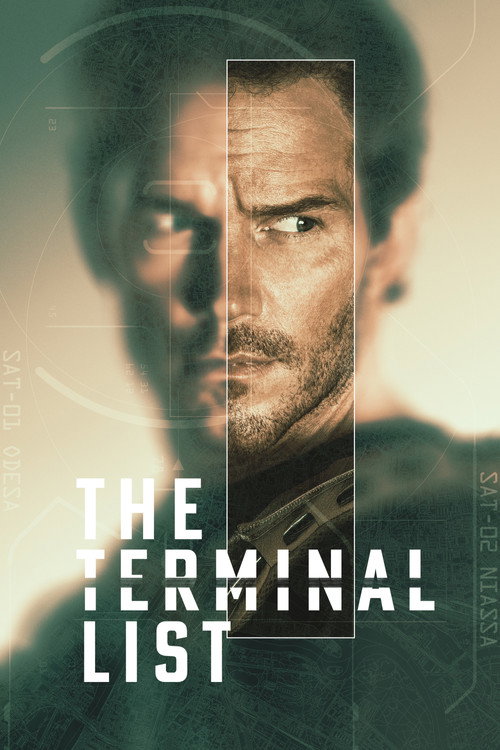
Based on Jack Carr's novel, the series follows Lieutenant Commander James Reece (Chris Pratt), whose SEAL platoon is wiped out in an ambush in Syria. Back home in Coronado his memories of the operation do not match the record, tragedy strikes at homehis wife and daughter are murdered, and he sets out to find who is responsible, helped by his old teammate Ben Edwards, now with the CIA (Taylor Kitsch), and the war reporter Katie Buranek (Constance Wu). Most of each episode is investigation, grief and tactical action.
The messaging the rubric counts lies almost entirely in the conspiracy. The trail leads away from Iran to something domestic and corporate, and the villains turn out to be the wealthy and powerful treating soldiers as expendable. That runs through every episode, but it is told as greed and betrayal by individuals, not as a system oppressing a group. Nothing else scores: Katie's brother and his blonde wife, a brief couple, were both raised in America.
The messaging the rubric counts lies almost entirely in the conspiracy. The trail leads away from Iran to Capstone Industries, whose billionaire chief Steve Horn rushed Nubellum's untested anti-PTSD drug into Reece's platoon; it gave the men brain tumours, and the ambush in Syria was arranged to bury the evidence. Reece's admiral and two officers of his own command were paid off, the Secretary of Defense authorised the trial and stayed silent while the platoon died, and Ben, the friend at Reece's side, helped set up the ambush. That runs through every episode, but it is told as greed and betrayal by individuals, not as a system oppressing a group. Nothing else scores: Katie's brother and his blonde wife, a brief couple, were both raised in America.
What keeps the score at zero is that the series' sympathies lie elsewhere. It honours the SEAL brotherhood, faith and family, and its distrust of elites is the kind left and right share. The villains get personal motives (Hartley's father's war trauma, Horn's billions), the people at the top are allowed to argue their case, and honest federal agents do their jobs. Women hold capable roles without comment, the mixed cast of SEALs, federal agents and Californians is what that world would have, and ethnicity, sex and sexuality are never themes.
Score breakdown
Each category is scored 0 to 3: 0 absent or presence only, 1 brief, 2 recurring or plot-relevant, 3 central or dominant. Timestamps refer to the film's running time.
| Category | Score | What we saw |
|---|---|---|
| Content | ||
| A Ethnicity | 0 | The one mixed couple is Katie's brother Brian, Asian-American like her, and his blonde wife Deb, seen with their small son in two scenes of one episode. As a brief couple it starts at 1, but Brian came to America as a small child with Katie, so the two share an American upbringing and differ only in skin colour, and one point comes off, giving 0. Katie is driven and estranged from her family, not held up as flawless, and ethnicity is otherwise never a theme. |
| B Gender and feminism | 0 | No gender messaging. Women hold capable roles (a former Army helicopter pilot, a US Marshal who served in the Army, a war correspondent, the Secretary of Defense) without comment; see zeroed. |
| C Sexuality and gender identity | 0 | No LGBTQ+ content. Sex appears only in passing, such as a strip-club scene where Reece buys pills (S01E03 0:34:30). |
| D Power and systems | 0 | The plot runs on a conspiracy of the powerfulof a defence-industry billionaire, a drug company, Reece's own Navy command and the Pentagon that treats soldiers as expendable, but it is framed as greed and betrayal by individuals, not as a system oppressing an identity group, so it is counted under J. The military itself is honoured, and honest federal agentsFBI and DCIS agents help expose the scheme. |
| E Cultural and historical revision | 0 | An adaptation of Jack Carr's 2018 novel. Nothing in the material recasts history or an established character to carry a message; Katie's Chinese-immigrant backstory is listed under zeroed. |
| F Religion portrayal | 0 | Islam is not portrayed. The Muslim world appears only as the Syrian battlefield, an Iranian suspectred herring and a captive's Arabic plea in one of Reece's flashbacks. |
| K Diverse cast | 0 | The SEAL platoon and the federal teams include Black members, Katie is a Chinese-born journalist, and Marco's family is Mexican, all in Southern California, the US Navy and federal agencies, where that mix is what the setting would have. It is a mix of ethnicity only: the characters are Christian where faith is shown, and none is gay. |
| Treatment | ||
| G Antagonist coding | 0 | The villains are rich and powerful: a tech billionaire and his fixer, senior officers and a cabinet secretary. They are defined by wealth and rank, which is counted under J, and each is given a motive of his or her own. Heroes and villains alike are mostly white: the hero and his SEAL brothers are white men, and a woman stands near the top of the conspiracythe final villain is a woman, the Defense Secretary, so the moral sides do not divide along ethnicity or sex. |
| H Didacticism | 0 | There are no lectures on identity or social justice. A few lines state the anti-corporate theme outright, briefly and in character; that is general politics, counted under J. |
| I Message over story | 0 | The story leads. The conspiracy is a thriller device, and the series spends its time on the investigation, Reece's grief and failing memory, and the action. |
| J Left-leaning politics framed as good | 1 | The conspiracy of the powerfulof a defence-industry billionaire, a drug company, Reece's own Navy command and the Pentagon against the soldiers they use is the series' one political theme, an anti-corporate story that a few lines state outright. Scored 1, not more: it is told as greed and betrayal by individuals, its distrust of elites is the kind left and right share, and no left-leaning cause is framed as good. If anything the reverse: a reform-minded official fares badlythe reform-minded Defense Secretary, who campaigns on troops' mental health and against contractors, turns out to have authorised the experiment; see notScored.
|
How the number is reached
- Categories A to K add up to 1 of 33, which gives 0.5 (1 ÷ 33 × 10, rounded to the nearest 0.5).
- Counterweight −0.5: the series complicates its critique of the powerful: the villains get personal motives, those at the top argue their case at length, and honest federal agents work the case.the Defense Secretary is given a personal motive in her father's war trauma and suicide (S01E08 0:18:41, 0:19:18) and argues her case with figures on veteran suicide (S01E08 0:06:27); Horn says their work has saved lives (S01E05 0:21:45); Cox resents what retirement gives a SEAL (S01E07 0:27:19); and FBI and DCIS agents expose the officers' role (S01E07 0:19:01, 0:35:06).
- Final rating 0.0, none or negligible.
Considered, scored 0
- A cast mixed across the SEAL platoon, the FBI and DCIS teams (S01E01 0:28:30; S01E05 0:33:31, 0:37:30) and Marco's Mexican family, the mix the setting would have (K).
- Katie's brother Brian and his blonde wife Deb (S01E04 0:13:05), a brief couple who share an American upbringing; Katie jokes that he broke a promise not to marry a blonde (0:51:17) (A).
- Katie's background as a Chinese-born immigrant whose father broke with the Communist Party, costing her home, language and name (S01E07 0:36:27), told as her reason for chasing the truth.
- Women in capable roles: Liz Riley, an Army helicopter pilot Reece once rescued (S01E05 0:01:12), Mac, a US Marshal and Army veteran (S01E05 0:10:13), and a woman as Secretary of Defense (S01E01 0:39:51), all shown without comment.
- Agnon's crude talk about flight attendants, which a colleague calls sexual harassment (S01E03 0:26:42), used to characterise him.
- An Arabic plea from a captive in Reece's flashback (S01E02 0:49:20) and 'hajis' in a commander's radio call (S01E05 0:01:28); neither portrays Islam.
- A realtor's pitch about the building's solar retrofit and 'Green Revolution' (S01E02 0:31:44).
Evidence and confidence
Confidence: Medium. Full English subtitles (the embedded English track) for all 8 of the owner's 8 episodes, the complete first season. A few shouted Spanish lines in the Mexico raid and part of an Arabic plea are not translated, and song lyrics appear only as titles.
Category F definition: As in the rubric: Islam shown as a peaceful and tolerant religion, aligned with human rights, in a way that works as a corrective message.
Noted, not scored: The series leans conservative in tone: it opens on Gideon choosing his warriors in the Book of Judges (S01E01 0:00:14), honours the SEAL brotherhood and warrior ethos throughout (S01E01 0:22:32; S01E03 0:51:12), and treats faith seriously, as when Marco likens Reece's ordeal to Job's (S01E04 0:25:21). It sides with its vigilante hero: Reece tells Katie he is justice (S01E07 0:52:54), and the FBI agent hunting him concludes Reece is the victim and his targets guilty as sin (S01E08 0:09:51). A reform-minded official fares badly.The reform-minded Defense Secretary, who campaigns on troops' mental health and against 'special interests' (S01E03 0:02:38; S01E04 0:19:50), is the final villain, and her claim that the dead are heroes rather than victims (S01E08 0:32:08) is part of her self-justification.
Episodes reviewed: S01E01, S01E02, S01E03, S01E04, S01E05, S01E06, S01E07, S01E08.
Rubric version 3. Reviewed 18 November 2026.